Professional NBA Moneyline Strategy for UK Punters
 Available in US
- Straight Matchup Odds: Identifying Profitable Live Underdog Moneyline Pricing
- The favourite trap and why it works
- Where underdogs become bets
- The maths of small dogs versus big dogs
- Converting from spread to moneyline
- Live moneylines and the overreaction trade
- Parlay moneylines and the structural margin
- The discipline of skipping favourites
- The role of moneylines in a portfolio

Straight Matchup Odds: Identifying Profitable Live Underdog Moneyline Pricing
NBA moneyline betting looks like the easiest market in basketball. Pick the winner. No spread, no total, no parlays. Most UK bettors I have known started here and ended up losing more on moneylines than on any other market, because the simplicity hides the maths. Beating the moneyline consistently is genuinely hard, and the bettors who think they are good at it are usually just betting favourites and pretending the win rate is skill.
The fundamental issue: a 70 percent favourite at fair odds pays 1.43. The book takes their margin, and the price becomes 1.36. Win 7 of 10 such bets and you make 4.30 across 10 units staked. Net profit: 0. The structural maths of moneyline betting demands that you either beat the closing line consistently or you find favourites priced as if they were closer to 65 percent likely to win when they are actually 70 percent. There is no third path.
The favourite trap and why it works
Public money flows toward favourites in NBA moneyline markets. The recreational bettor’s logic is intuitive: I think the Lakers will beat the Pistons, the price says I have to lay 1.20 on the Lakers, that feels safe, that feels like a winner. The bet wins 78 percent of the time. The bettor feels validated. The bettor loses money over a long sample.
The maths is unforgiving. At 1.20, breakeven is 83.3 percent. If your actual hit rate is 78 percent, you lose 5 percent of every unit staked, on average, over a long sample. The book is happy to offer this price because they know the public will bite. The hit rate masks the loss rate for months at a time, until enough sample accumulates that the variance washes out and the negative ROI surfaces.
This is why the bettors who win on moneylines are typically betting underdogs, often substantial underdogs, at prices that overestimate the favourite’s chance to win. The win rate is lower but the per-bet expected value is higher. The bettor who hits 38 percent of bets at average odds of 2.85 is profitable. The bettor who hits 78 percent at 1.20 is not. The first is harder to be psychologically, which is precisely why it pays.
Where underdogs become bets
Live dog spots in NBA moneyline markets cluster around specific situations. A team coming off a back-to-back on the road, against a rested opponent, gets priced as if they have no chance – when in fact they win about 35 percent of such games. A team on a long winning streak gets priced too low because the public has noticed the streak. A team with a star out gets priced as if the rest of the roster is irrelevant.
These spots all share a structural feature: the line moves further than the underlying probability shift justifies, because public money is following narrative rather than probability. The bettor’s job is to identify when the price overshot and the actual probability gap is smaller than the price suggests.
The data work behind this is not glamorous. You need a baseline expectation for each team independent of recent narrative. You compare the moneyline implied probability to that baseline. When the gap is meaningful, you have a bet. When it is not, you do not. This is the boring work that produces moneyline edges, and almost nobody does it because betting favourites feels safer in the moment.
The maths of small dogs versus big dogs
An NBA moneyline at 2.10 needs a 47.6 percent win rate to break even. An NBA moneyline at 4.00 needs only a 25 percent win rate. The bigger the dog, the lower the win rate required for profitability, but also the more variance in the outcome and the smaller the sample of bettable spots.
Small dogs – priced 1.80 to 2.30 – are the most common moneyline bet for a reason: they appear constantly, they have manageable variance, and a small edge per bet compounds quickly across volume. Big dogs at 3.50-plus are rarer, more variant, and require deeper conviction.
My ratio: roughly two-thirds of my moneyline bets are small dogs, one-third are bigger dogs in specific situations I have identified as historically mispriced. I do not bet favourites on moneyline almost ever, with the exception of live in-game spots where the price has overshot in response to a temporary momentum run.
Converting from spread to moneyline
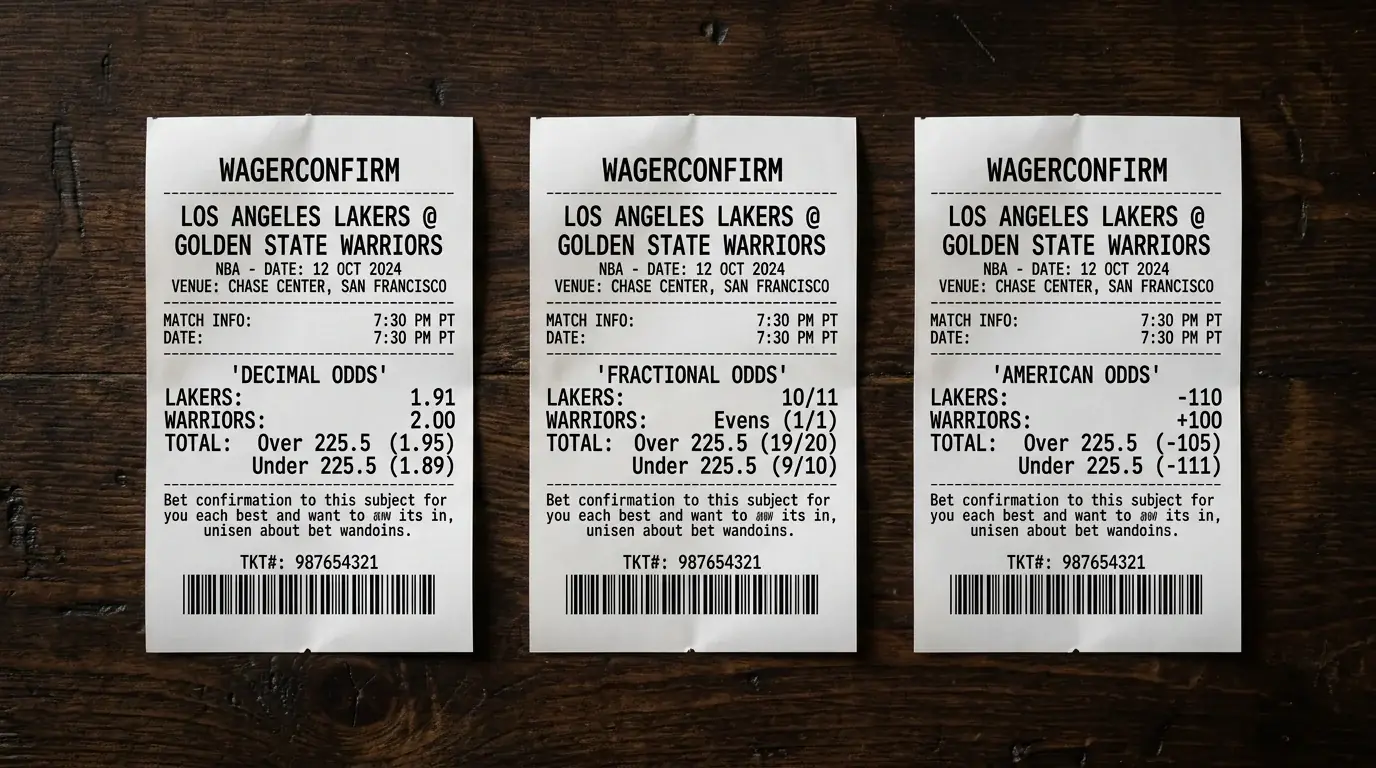
There is a rough conversion between spread and moneyline that is useful to understand. A 3-point favourite in NBA prices around 1.50 on moneyline. A 6-point favourite prices around 1.30. A 9-point favourite prices around 1.20. The relationship is not linear – the bigger the spread, the more the moneyline compresses, because at some point the favourite winning becomes near-certain regardless of margin.
Bettors who handicap spreads can use this to spot moneyline value indirectly. If your model says a team should be a 4.5-point favourite but the spread is 6, the moneyline at 1.30 is probably overpriced – the favourite is winning less often than the price implies. The dog at 3.50 might be the bet, even though the spread number was your starting point.
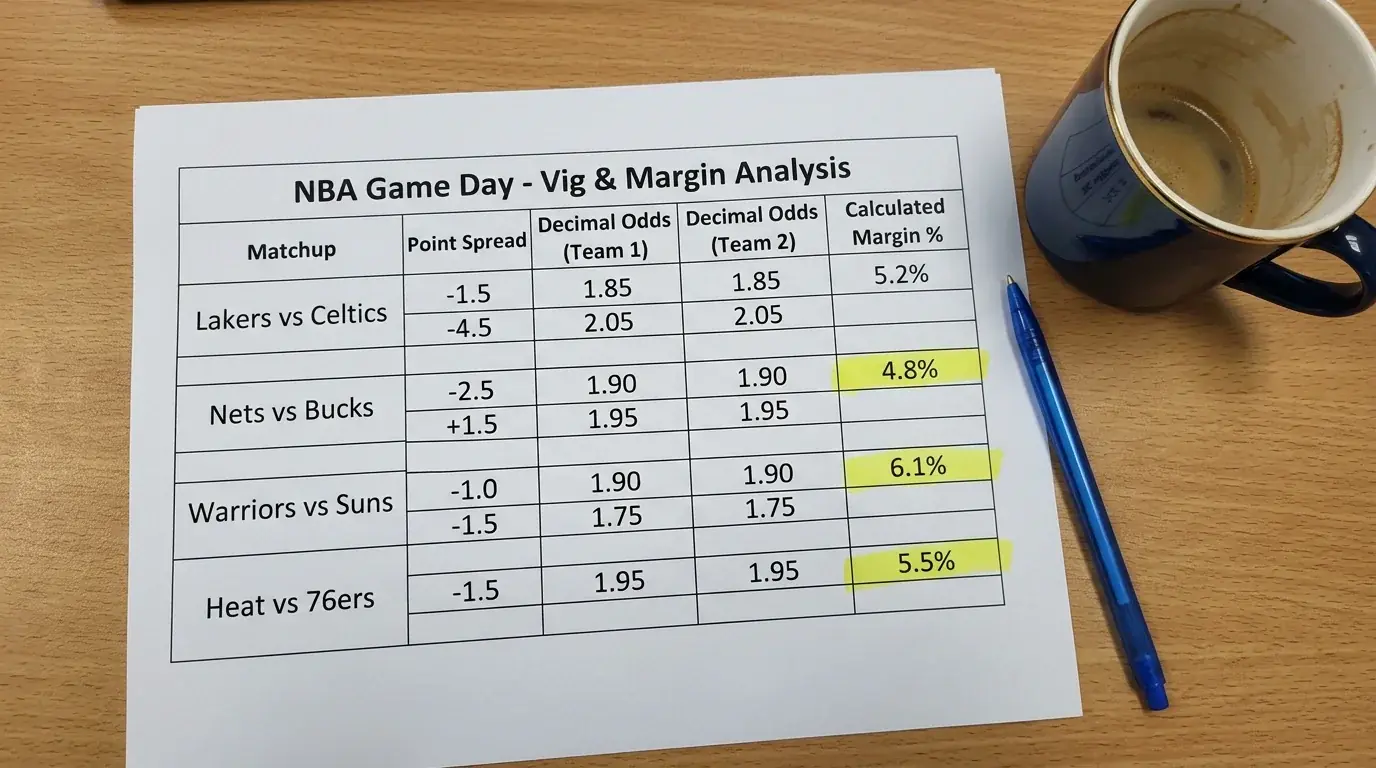
The reverse also works. If your model has the underdog winning 35 percent of the time but the moneyline implies 28 percent, the dog is the bet. The spread version of the same edge might be smaller because spread vig is lower and the line is sharper. The moneyline can capture edge that the spread market has corrected. This is part of why bettors who do not understand how the vig differs across markets within the same game systematically miss the spots where moneyline is the better play even when their underlying handicap was built around spread analysis.
Live moneylines and the overreaction trade
NBA live moneylines move on every possession. A team that goes down 10 in the first quarter sees their moneyline drift 20 to 30 cents – sometimes more in volatile games. If you believe the deficit is temporary or non-predictive of the final outcome, the live price offers value relative to your pre-game expectation.
This works best for teams known to start slowly. Some NBA rosters are constructed around veterans who pace themselves through the first quarter and accelerate in the second half. If their pre-game moneyline implied a 60 percent win probability and the live price after a slow first quarter implies 45 percent, the question is whether the 15-point drop in implied probability is supported by anything other than the first quarter score.
Usually it is not, fully. The market overreacts to early quarter results, and live moneyline bets on teams falling behind by 8 to 12 in the first quarter have produced consistent edge in my tracking. The key constraint is bet sizing – live moneyline bets carry higher variance per unit because you are buying lower implied probability for higher payoff, and a string of misses can be punishing.
Parlay moneylines and the structural margin
UK books push parlay moneyline bets aggressively, and the maths is straightforward: the parlay margin compounds across legs. A two-team moneyline parlay at vigged-up prices has a hold around 12 to 15 percent. A three-team parlay is 18 to 22 percent. By the time you reach four or five legs, you are giving up a quarter or more of your stake’s expected value before any handicapping has happened.
US data from 2025 puts the average parlay margin at 24.2 percent, against 4.4 percent for singles. The structural reason books advertise parlays heavily, and the structural reason they are bad bets in almost every situation, is this gap. The exception is correlated parlays – bets where the two outcomes are mathematically linked – but UK books typically prohibit those or price them as if they were uncorrelated, which removes the only legitimate parlay edge.
If you want to bet multiple games, bet them as singles. Stake size for stake size, the expected value is dramatically higher. The dopamine of a big parlay payout is real, but the cost of that dopamine is the difference between a profitable bettor and a losing one.
The discipline of skipping favourites
The single hardest behavioural shift in moneyline betting is learning not to bet favourites. The instinct to back the team you think is going to win is overwhelming. The instinct is wrong. Backing favourites at vigged moneylines is the single most common path to slow bankroll erosion in NBA betting, and it disguises itself as competence because the win rate stays high.
What works: shift the moneyline mindset from “who do I think will win” to “where is the price wrong.” Sometimes those align. Often they do not. The bets you skip because you cannot find value are the bets that keep your bankroll intact.
The role of moneylines in a portfolio
Moneyline bets are not the foundation of my NBA betting. They are a complement to spreads and totals, useful for capturing specific dog situations and live overreactions, but not the workhorse market they appear to be. The structural margin and the favourite trap make pure moneyline betting harder than its surface suggests, and most UK bettors would benefit from limiting moneyline exposure rather than expanding it.
Where moneylines earn their place in a portfolio: identifying specific dog spots the spread market has not fully priced, live in-game overreactions to early deficits, and as a clearer expression of conviction than the spread market sometimes offers. Used selectively, moneylines are a useful tool. Used reflexively, they are the most efficient way to give your bankroll to the bookmaker while feeling like you are winning.
Is it better to bet NBA moneylines or point spreads?
Point spreads typically have lower vig and more consistent edge opportunities. Moneylines are best used selectively for underdog spots and live overreactions, not as the primary market for systematic betting.
What win rate do I need to be profitable on NBA moneylines?
It depends entirely on the average odds you take. At average odds of 2.00 you need above 50 percent. At average odds of 3.00 you need above 33 percent. Track your average odds and required win rate together.
Should I bet moneyline parlays?
Almost never. Parlay margins compound across legs, with average parlay hold reaching 24 percent or more, compared to 4 to 5 percent on singles. Single bets are structurally more profitable per pound staked.
Written by the editors at nba bet of the day.