Daily NBA Bet of the Day: UK Punter Value Framework
 Available in US
- NBA Betting Value: Five Critical Metrics for Tonight’s Slate
- Table of Contents
- What “Bet of the Day” Actually Means When the Margin Is Already Against You
- The UK Betting Market Backdrop That Shapes Every NBA Slip You Place
- Why the UK Has Suddenly Become an NBA Audience That Matters
- How I Build a Single Daily Selection Without Falling for the Slate
- Expected Value Translated for a Punter Reading Decimal Odds
- The Four NBA Markets You’ll Actually Bet, and the One You Probably Shouldn’t
- Why Tonight’s Total Probably Sits Higher Than You Think
- The Quiet Death of Home-Court Advantage
- The Rozier-Billups Reckoning and What Quietly Disappeared From the Slate
- Why the UKGC Licence Number on the Footer Is Doing More Work Than You Think
- Prediction Markets, Event Contracts and the Question UK Punters Keep Asking
- The Part Most NBA Tipsters Skip Past in Two Sentences
- How a Daily Pick Earns Its Place on This Site
- Common Questions From UK Punters New to the NBA Slate
- What Tonight Will Look Like When You Open Your Bookmaker App

The first time a friend asked me which NBA game to back on a Tuesday evening, I gave him a confident answer in under a minute. The bet lost by nine points. The friend hasn’t asked since, which is probably the right outcome — a one-line tip dressed up as a “bet of the day” is the kind of thing that quietly drains an account over a season. Ten years of doing this for a living have taught me the daily pick is not the product. The framework behind it is.
This is a long read built for the UK punter who watches a 3 am Lakers game with a phone screen lighting the ceiling. About one in ten British adults placed an online sports bet in 2025, and the slice who care about the NBA has grown faster than most other sports in the last twenty-four months — Prime Video’s first UK season delivered viewership growth nobody at the league office had budgeted for.
What follows is not a list of tonight’s best bets. It’s the framework I use myself — how a single selection earns its place, how to read decimal odds for what they imply, why the 2025 prop-betting scandal changed which markets matter, and how a punter in London or Glasgow should think through a properly UKGC-licensed lens.
This guide is written for adults aged 18 or over in Great Britain who hold accounts with operators licensed by the Gambling Commission. Nothing on this page is a tip or financial advice. Always set deposit limits before you place a bet, and stop if the activity stops being entertainment.
NBA Betting Value: Five Critical Metrics for Tonight’s Slate
- An NBA “bet of the day” should clear two tests — documented positive expected value, and survival of a checklist covering pace, rest, and injury status — before it earns a stake.
- UK bookmakers run an average margin north of 5% on mainline NBA markets and over 10% on player props — the maths you fight before any handicapping skill enters.
- Same-game parlays held 24.2% versus 4.4% on singles in recent regulator data — a gap that explains why the 8-leg “dream slip” is the bookmaker’s favourite product.
- The 2025 federal indictments involving Terry Rozier and Chauncey Billups changed which two-way-player props books even offer, and the 2026 UK prop slate is materially different from 2024.
- Always use a UKGC-licensed operator, set a deposit limit before tip-off, and treat any “free bet” offer as marketing — not value.
Table of Contents
- What “Bet of the Day” Actually Means
- The UK Betting Market Backdrop
- Why the UK Is an NBA Audience That Matters
- Building a Single Daily Selection
- Expected Value on Decimal Odds
- The Four NBA Markets You’ll Actually Bet
- Why Tonight’s Total Sits Higher Than You Think
- The Quiet Death of Home-Court Advantage
- The Rozier-Billups Reckoning
- Why the UKGC Licence Number Matters
- Prediction Markets and Event Contracts
- The Part Most Tipsters Skip Past
- How a Daily Pick Earns Its Place
- Common Questions From UK Punters
- What Tonight Will Look Like
What “Bet of the Day” Actually Means When the Margin Is Already Against You
I’ll start with a confession. The phrase “bet of the day” is a marketing artefact more than a betting concept. The idea that of fourteen NBA games on a Tuesday slate, exactly one is the optimal selection for a generic punter is an editorial frame, not a mathematical one. What it actually describes, stripped of the headline, is the single market where the analyst has identified the largest priced-in mistake by the bookmaker, adjusted for risk.
That definition exposes the question most “bet of the day” pages avoid: priced-in mistake compared to what? If the answer is “compared to our model,” you need to know what the model does. If the answer is “compared to gut feel,” you’re being sold a horoscope.
Bet of the day — a single selection across a daily slate identified as offering the largest positive expected value relative to the closing line, given a defined betting model. Not a guaranteed winner. Not a tip. A best-priced opportunity.
The grounding number after a decade of doing this: the average hold across the US sports betting market in 2025 ran at 10.15% — out of every £100 wagered, the books kept £10.15 long term. UK bookmaker margins on mainline NBA markets are broadly similar, and meaningfully higher on props. Before any handicapping skill enters the equation, you’re betting into a structural disadvantage of around 4–5% on a typical two-way market, and double that on a flashier prop. A “bet of the day” worth backing has to clear that margin.
The piece usually missing from a competitor’s “bet of the day” page is the explicit gap between the bookmaker’s implied probability and the analyst’s estimate. Without that gap quantified, what you have is a confident sentence next to a logo. Everything from here is built to make that gap visible.
The UK Betting Market Backdrop That Shapes Every NBA Slip You Place
There’s a tendency among NBA tipsters — particularly the imported American kind — to write as though the betting environment around the game is universal. It isn’t. A punter in Liverpool is operating inside a market with very specific rules, a very specific regulator, and pressures an analyst in New Jersey doesn’t have to think about.
The headline numbers tell you the room. UK customer-facing gambling generated £15.6 billion in gross gambling yield over the April 2024 to March 2025 financial year, up 7.7%. Online accounted for £7.8 billion, growing 13.1%. By mid-2025, online GGY was still expanding, up 8% in Q2. The retail estate is contracting — 5,825 betting shops as of March 2025, down 1.8% — but the action is decisively migrating to the app in your hand.
In Q1 2025, 15% of British men and just 4% of British women placed a sports bet — a gender split close to four to one, one of the widest in the UK leisure economy. Around one in ten British adults placed an online sports bet across 2025 as a whole.
That ratio tells you who the bookmaker prices for: a narrow, predominantly male slice of the population placing an estimated 290 million online bets on real events each month. The NBA is a niche-but-growing tile in that mix. The bookmaker’s NBA trading team is smaller than its football team, lines move on lower liquidity, and prop markets are managed with less granularity. That’s both why edges exist and why they’re fragile.
H2 Gambling Capital estimated the UK’s unlicensed — black-market — gambling sector at around £16.6 billion in 2025, up from roughly £5 billion in 2019. That’s the shadow that explains why the UKGC has been tightening enforcement so visibly.
Flutter Entertainment — owner of Sky Bet, Paddy Power and Betfair — reported group revenue of $15.91 billion for full-year 2025, up 17%. Entain, parent of Ladbrokes and Coral, posted £5.3 billion in net gaming revenue with UK and Ireland online up 15% by volume. The market is consolidating around a small number of major groups whose pricing tracks one another within a tight band — which is why line shopping still works. The Office for Budget Responsibility has flagged concern about £500 million of yield leaking into the black market if Remote Gaming Duty rises to 40%, prompting the Treasury to put £26 million toward Gambling Commission enforcement.
Why the UK Has Suddenly Become an NBA Audience That Matters
Ten years ago, if I’d told a colleague that an NBA regular-season fixture would be the most talked-about sports event among under-thirties in London on a Sunday in January, they’d have laughed. Now it’s plausible enough that nobody bats an eyelid. The shift has been astonishingly fast, and it has direct consequences for how the prop markets on tonight’s slate are being priced.
The numbers are stark. UK NBA viewership on Prime Video grew 312% year on year in the first season of an eleven-year partnership, with overall UK viewing demand for the league up 444%. The NBA’s own app saw UK engagement rise 52% year on year. Alex Green, Managing Director of Prime Video Sport International, captured the operator view bluntly: these record audiences on Prime Video, he argued, demonstrate an untapped demand for the NBA in Europe, with audiences making the NBA on Prime a part of their weekly sports schedule.
The eleven-year media rights cycle that began in 2025–26 is worth around $76 billion across Disney, NBC and Amazon Prime Video. Roughly 70% of NBA social-media engagement now comes from audiences outside the United States. The league is no longer an American product that exports — it’s a global product with an American home.

That global pivot shows up in the talent pool. The 2025–26 season has more than 130 international players on opening-night rosters — a record. NBA content generated over 30 billion social-media views in the first month of the season, and the 2025 Finals Game 7 drew 16.35 million US viewers, the most-watched Finals game in six years.
For the punter, three things follow. UK liquidity on NBA markets has grown, narrowing some of the cruder mispricings — the days a UK bookmaker would casually offer two-point softer spreads than a US sportsbook are over. Public money in the UK is now thick enough that fade-the-public angles work the way they do in the States. And prop markets on international stars are now genuinely sharp at UK books, because the audience betting them is large enough that trading teams treat them as priority lines.
How I Build a Single Daily Selection Without Falling for the Slate
The question I get every workshop: of a typical eight-to-fourteen-game NBA evening, how many genuinely good bets are there? My honest answer after a decade of looking at slates — most nights, zero to two. The skill isn’t finding the bet. It’s the discipline to skip on the four nights out of five when the slate doesn’t give you one.
The foundation is a checklist. Every potential selection runs through the same seven-stage filter, and most candidates die at stages two or three.
The seven-stage filter before a bet earns its place
- Step one — confirm the closing line is not yet locked. Any bet inside the final 30 minutes before tip-off is into a sharper line.
- Step two — strip the vig from the two-way market to find the fair implied probability, then compare to your model. If the gap is less than 2.5%, walk away.
- Step three — verify the injury report is current as of the published NBA timestamp. A “questionable” star at 6 pm UK time may be a confirmed scratch by 1 am.
- Step four — check pace and rest. Two teams on the second night of a back-to-back behave differently from the closing lines they’ve been given.
- Step five — line-shop across at least two UKGC-licensed accounts. A half-point difference at 1.91 versus 1.95 is real money over a season.
- Step six — size stake to a fixed percentage of bankroll, not to the confidence you feel. Confidence is the most expensive emotion in this sport.
- Step seven — set a deposit limit before you place the bet. The order matters more than people who don’t run a bankroll understand.

Notice what isn’t on that list. No “lean,” no “gut call,” no “the home crowd will be loud.” Those are the reasons people give when they win, and quietly forget when they lose. The seven stages above are the parts of a decision I can defend after the fact.
Worked example: stripping the vig on a total
Step 1 — implied probability from 1.91 is 1 divided by 1.91 = 52.36%.
Step 2 — both sides at 1.91 imply 104.72% combined. The bookmaker margin (overround) is 4.72%.
Step 3 — strip the vig: 52.36% divided by 104.72% = 50.00% fair probability for each side.
Step 4 — if your projection gives the over a 56% chance, EV per £1 staked is 0.56 times (1.91 minus 1) minus 0.44 = +£0.07. A 7% edge, realistic for a soft total.
Step 5 — if your projection gives 70%, the implied 33% edge is almost certainly your model being wrong. Phantom EV is the most common amateur trap.
The detailed mechanics of expected-value betting on the NBA are unpacked in the cluster guide on NBA expected value betting in the UK. The workflow point here is simple: filter ruthlessly, calculate before clicking, accept that most days the answer is no bet.
Expected Value Translated for a Punter Reading Decimal Odds
I once sat next to a friend in Camden as he placed a £10 bet at decimal 1.83. He thought it was great value. I asked what probability he assigned to it winning. He said about 60%. I asked what the bookmaker was implying. He guessed 55%. The actual implied probability on 1.83 is 54.6%. He was right by accident, and his estimate of his own edge was almost certainly too generous.
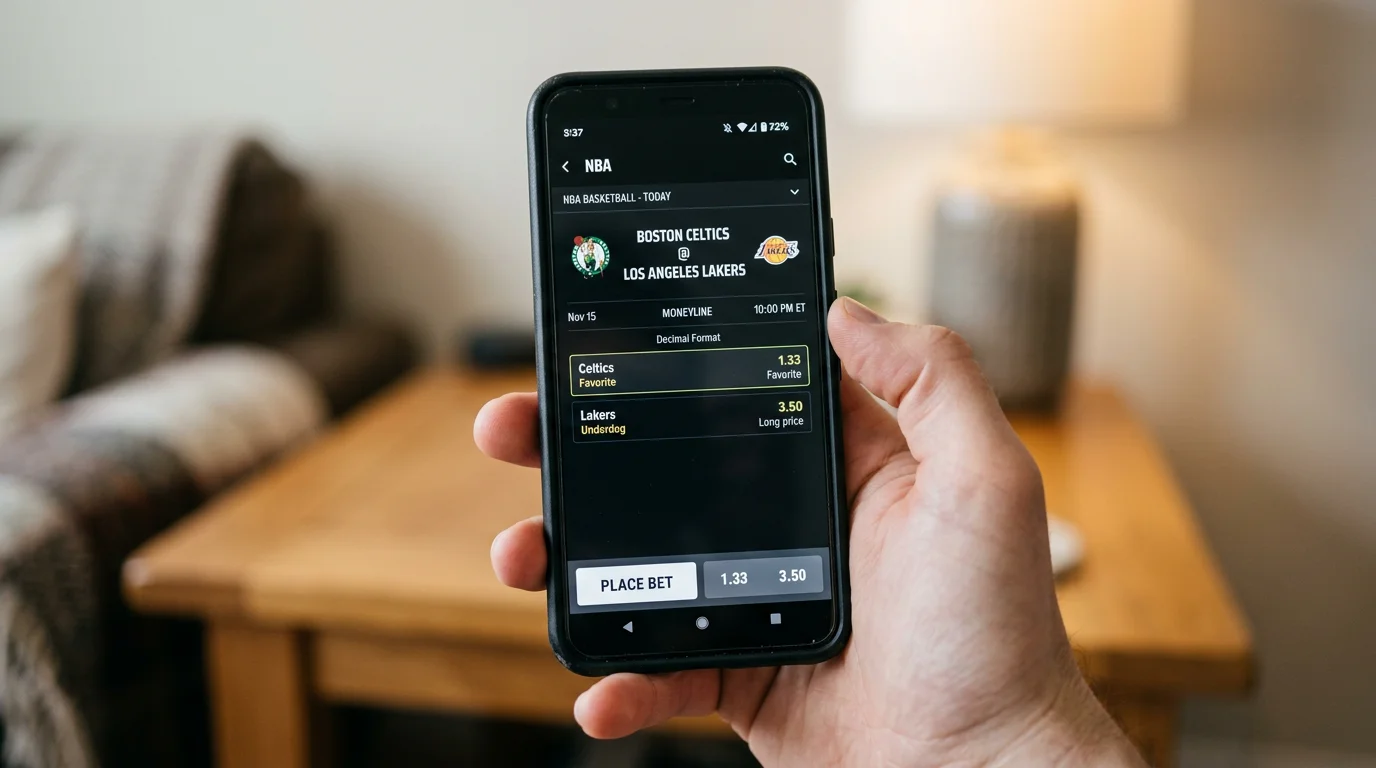
The terminology is intimidating but the maths is primary-school arithmetic. Take any decimal price, divide one by it. The result is the bookmaker’s implied probability. Decimal 2.00 implies 50%. Decimal 1.91 implies 52.36%. Knowing this off the top of your head is more valuable than any pick service.
Implied probability cheat sheet — UK decimal odds
Decimal 1.50 — implied 66.67% — fractional 1/2
Decimal 1.83 — implied 54.64% — fractional 5/6
Decimal 1.91 — implied 52.36% — fractional 10/11
Decimal 2.00 — implied 50.00% — fractional even
Decimal 2.50 — implied 40.00% — fractional 6/4
Decimal 3.00 — implied 33.33% — fractional 2/1
The bookmaker’s margin is baked in. Two opposite outcomes at 1.91 each imply 104.72%. That 4.72% overround is the operator’s edge before any handicapping skill enters.
Expected value isn’t mystical. It’s the gap between your estimate of true probability and the bookmaker’s implied probability, multiplied by stake and payout. The formula: EV equals (probability of winning times net profit) minus (probability of losing times amount lost). For a £10 bet at decimal 2.00 on an outcome you think has 55% chance, EV is (0.55 times £10) minus (0.45 times £10) = +£1. That’s 10p of expected value per £1 staked.
Worked example: spotting a +EV moneyline
Step 1 — bookmaker offers a road team at 2.25. Implied probability is 1 divided by 2.25 = 44.44%.
Step 2 — your model gives the road team a 48% chance of winning outright.
Step 3 — for a £10 stake, EV is (0.48 times £12.50 profit) minus (0.52 times £10 loss) = +£0.80. That’s an 8% edge — substantial by NBA standards.
Step 4 — caveat: this only holds if your 48% is correct. Overconfident probability estimation is the single biggest source of phantom EV in amateur handicapping.
The discipline that separates winning bettors from the rest is honesty about model error. Every probability you assign should be one you’d bet against yourself on. If you call a game 60-40, you should be willing to take either side at fair odds. Most people, challenged this way, admit their real estimate was 55-45 — and the 5% they thought they had evaporates.
The Four NBA Markets You’ll Actually Bet, and the One You Probably Shouldn’t
Open any UK bookmaker app on a random NBA fixture and you’ll see forty to two hundred markets on a single game. That breadth is marketing, not edge. Almost all meaningful price discovery happens in four markets: point spread, totals, moneyline, and player props. Everything else is either a wrapper on those four or a high-margin novelty. One Yahoo Sports analyst put the trap plainly: stacking too many legs into a same-game parlay builds a slip that pays +2500 and holds expected value almost always negative once the legs are priced properly.
How the four core NBA markets compare on punter-facing characteristics
| Market | Typical margin | Liquidity | Skill ceiling for the punter |
|---|---|---|---|
| Point spread | Around 4–5% | High | High — most studied market |
| Total points (over/under) | Around 4–5% | High | High — pace-driven |
| Moneyline | Around 4–7%, wider on long shots | High on close games, thin on heavy favourites | Moderate — generally fully priced |
| Player props (mainline) | Around 8–14%, can be wider | Variable, often thin | High — but variance is brutal |
| Same-game parlay | Around 20–25% effective hold | High demand, low value | Low — structurally disadvantaged |
Point Spread as the Default Market
The point spread is the most heavily traded NBA market in the world. By turning a moneyline that swings from 1.20 to 6.50 into a near-coin-flip handicap priced around 1.91 on both sides, the bookmaker creates a tightly contested two-way market that rewards careful analysis. The closing spread is the closest thing the sport has to a true consensus probability. What’s changed in the last decade is the size of the home-court adjustment: closing-line data from recent seasons shows the average sitting around 2.05 to 2.10 points, with home teams covering at roughly 50.1% against that line. The classical wisdom that home court is worth three full points is mathematically obsolete. Implications for spread-pickers are detailed in the dedicated cluster on NBA point spread betting in the UK.
Totals When the Line Lives Above 230
Totals have become the most pace-driven NBA market. League pace in the opening stretch of 2025–26 hit 101.9 possessions per 48 minutes — the highest in 30 years of play-by-play data. Scoring sits at 117.7 points per team per game, the third-highest in NBA history and the highest in 64 years. Lines have moved up to compensate, with most marquee matchups in 2026 closing between 228 and 238 points, but the rate at which lines have risen lags actual scoring on specific matchup types — particularly when two top-15 offences meet without elite defenders on the floor. The cluster on NBA totals betting in the UK walks through translating pace into a fair total.
Player Props After the 2025 Reset
Player props are where most “bet of the day” content actually lives in 2026. They’re also where bookmaker margins are widest and where the post-Rozier-Billups regulatory reset has visibly thinned the offerings. Adam Silver was direct after the autumn 2025 indictments: the league had asked partners to pull back some of the prop bets, especially on two-way players who don’t have the same stake in the competition. UK books followed suit. The maths specific to props is covered in the dedicated NBA player props betting in the UK guide.
Same Game Parlays and Why the Hold Hurts
The same-game parlay is the bookmaker’s favourite product, and the reason is one sentence of regulator data: realised hold on parlay-style products in US states reaches 24.2% against 4.4% on singles. The same structural disadvantage applies in the UK — the marketing name changes (bet builder, acca, multi) but the maths does not. In 2023, parlay-style products accounted for 27% of total handle in Illinois, New Jersey and Colorado combined, up from 22% in 2021. The mathematical case for an SGP exists when there is genuine positive correlation between legs — a star guard’s points combined with his team winning, for instance. The deeper dynamics live in the cluster on the NBA same game parlay and bet builder.
Why Tonight’s Total Probably Sits Higher Than You Think
Open any NBA fixture in 2026 and you’ll see a total that, to anyone who watched the league a decade ago, looks comical. Two hundred and thirty-six points. Two hundred and forty-one. Lines that would have been outright errors in 2014 are now the median. The instinct is to bet the under. The instinct is wrong, and the data tells you why.
League pace in the opening weeks of the 2025–26 season hit 101.9 possessions per 48 minutes, the highest figure in 30 years of play-by-play data. Scoring averages 117.7 points per team per game — third-highest in NBA history and the highest since the 1961–62 season, 64 years ago. The lines aren’t high. The game is fast.
The mechanism is straightforward. More possessions means more shot attempts. More attempts at modern three-point rates (around 41 attempts per team per game and rising) means more scoring. Bookmakers price the average game competently. They price the genuine pace outlier — two teams both ranking top-five in possessions per 48 — slightly under what the underlying numbers suggest. That’s the soft pocket for over-bettors who do their pace research before the line lands.
A 30-year league record for pace ought to dominate the pre-match conversation on every NBA broadcast and tipster’s page. Almost none of them mention it. The number is sitting in plain sight on NBA.com and nobody is using it to calibrate their totals.
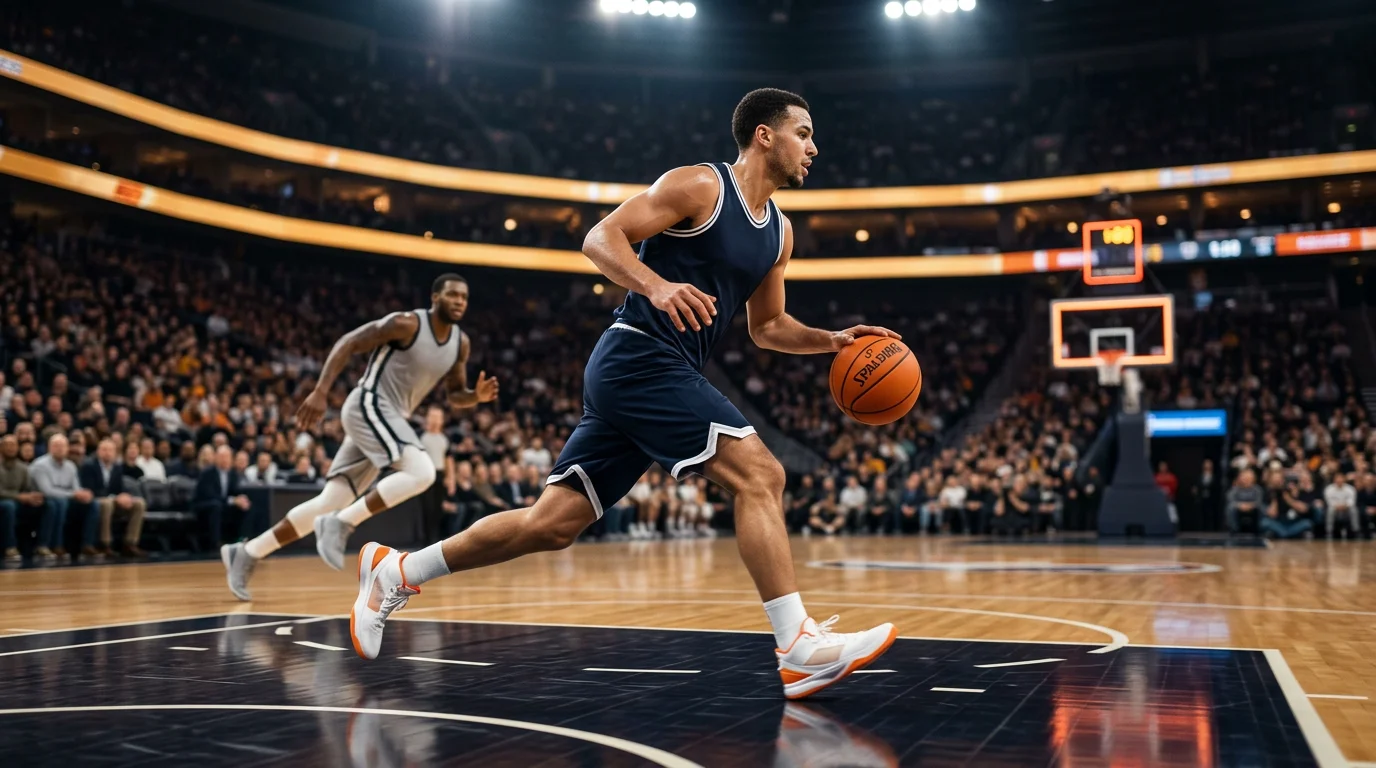
One practical filter. Combined effective field goal percentage of the two teams is a stronger predictor of game total than either offensive rating in isolation. If both shoot above 56% eFG% for the season, a soft over is more likely than the closing line suggests. If either is below 53%, the over becomes much harder regardless of pace. It’s a small handicapping fact that doesn’t appear in any major handicapping page but moves win rate measurably over a fifty-bet sample.
The Quiet Death of Home-Court Advantage
If I had to name the single most over-stated factor in NBA handicapping, it would be home court. Everyone knows about it. Most pundits weight it heavily. Almost nobody has updated their mental model since approximately 2012. The data is unambiguous and uncomfortable: home-court advantage in the NBA is a fraction of what it used to be, and bookmakers have adjusted accordingly, but the public has not caught up.
Home win percentage in the NBA averaged 66.2% during the 1980s. In the 2020s, it averages 55.1%. That’s not a marginal shift — it’s an eleven percentage point collapse over four decades, and the structural causes for it are unlikely to reverse.
Across 43 seasons of available data, the correlation between league-wide three-point attempt rate and home win percentage runs at minus 0.88 — the more three-pointers, the smaller the home edge. This isn’t coincidence; it’s mechanical. The three-point shot is the lowest-variance scoring action in basketball that doesn’t depend on referee eyeline or crowd noise. When more of the offence runs through outside shooting, the elements that historically gave home teams an edge — favourable whistles, rim protection energy, transition defence — matter less.
For a spread bettor, the market is near-perfectly calibrated to the new reality. The edge is not in believing home court is more than the line — it’s in knowing which game-types deviate. Back-to-back road games for the visitor see slightly inflated home win rates. Marquee national-broadcast home games against perennial contenders see lower home win rates because the visiting star tends to elevate.
In the seven most recent Game 7s in the NBA (going back to spring 2025), home teams that opened as favourites went 5-2 straight up and 5-2 against the spread. Game 7 home court is one of the few playoff-specific edges that has not eroded — though even then, the sample demands caution.
The Rozier-Billups Reckoning and What Quietly Disappeared From the Slate
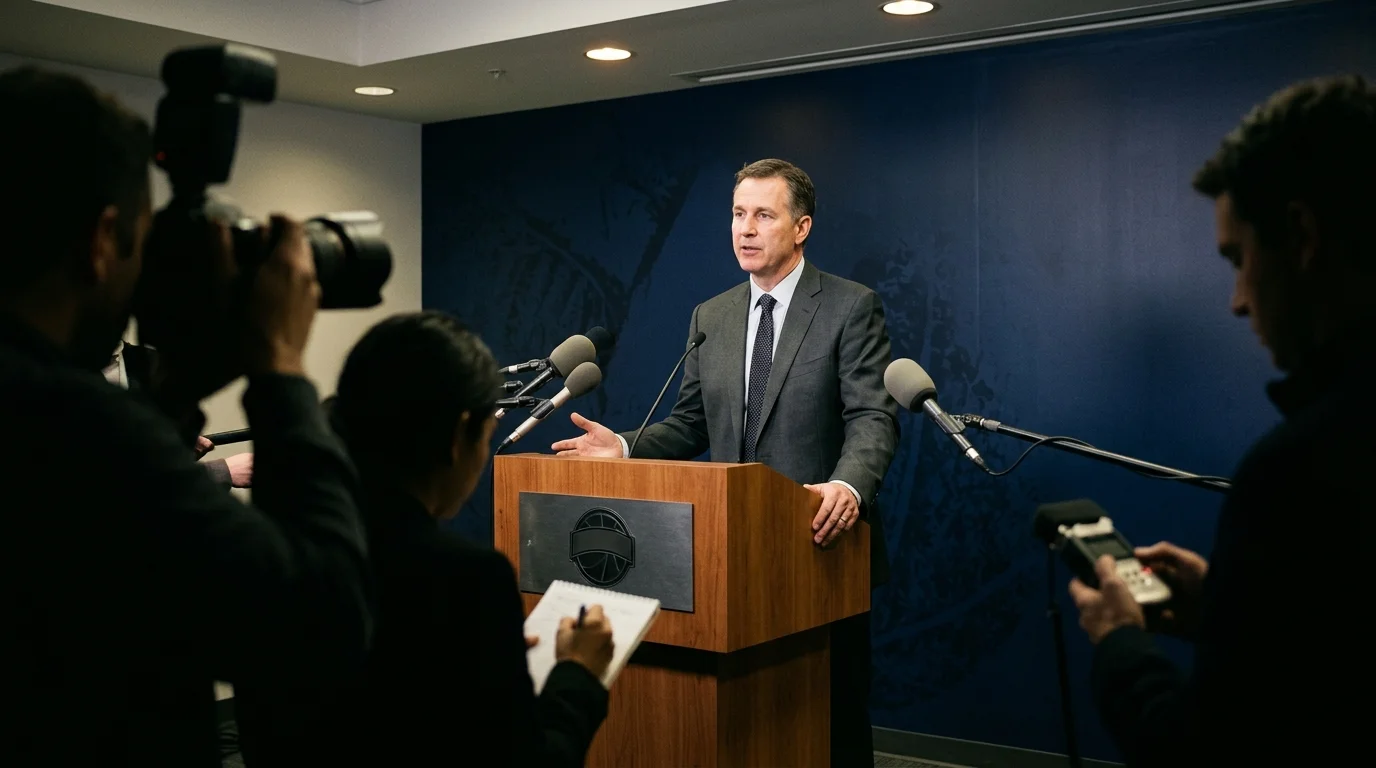
October 2025 was the month the NBA gambling-integrity question stopped being abstract. Federal prosecutors in the US indicted more than thirty individuals — including Miami Heat player Terry Rozier and Portland Trail Blazers head coach Chauncey Billups — in connection with illegal sports betting. The story dominated American sports media. It got less attention in the UK, partly because Rozier and Billups aren’t household names here. But the regulatory and product consequences have changed the prop slate a UK punter sees in 2026.
Adam Silver’s response was measured but pointed. “There’s nothing more important to the league and its fans than the integrity of the competition, so I had a pit in my stomach,” he told NBC Sports during a Celtics-Knicks broadcast. “It was very upsetting.” Within weeks, Silver was saying the league had asked partners to pull back some of the prop bets, especially on two-way players who don’t have the same stake in the competition, where it’s too easy to manipulate something that seems small.
Two-way contracts in the NBA cover players who split time between an NBA roster and the G League. They have lower visibility, smaller minutes, and — most relevant to integrity — less reputational downside if they intentionally underperform in a single low-stakes game. The asymmetry between gain and loss is most exploitable for this group.
The number that caught regulators’ attention was Rozier’s salary: $26.6 million annually, around 17% of the Miami Heat’s salary cap. The implication wasn’t that highly paid players were the integrity risk — it was that exposure ran further down the roster, and any system pricing props uniformly across roster positions was leaving a door open.
UK bookmakers responded faster than the public realised. By December 2025, props on end-of-bench and two-way players had been withdrawn at major UK operators. Mainline props on rotation players remain available, but limits are lower and operator response to unusual betting patterns is markedly tighter. Silver had spoken to this earlier: there are very sophisticated algorithms tracking the action, he noted at an Associated Press Sports Editors convention, and when they see aberrational betting, you’re going to get caught.
What this means for tonight’s slate: the prop market is materially narrower than it was in 2024 — fewer player names, fewer alternate lines, tighter stake limits. The punter benefits from a cleaner market on offered names but loses the soft pockets that used to exist on low-visibility rotation pieces.
Why the UKGC Licence Number on the Footer Is Doing More Work Than You Think
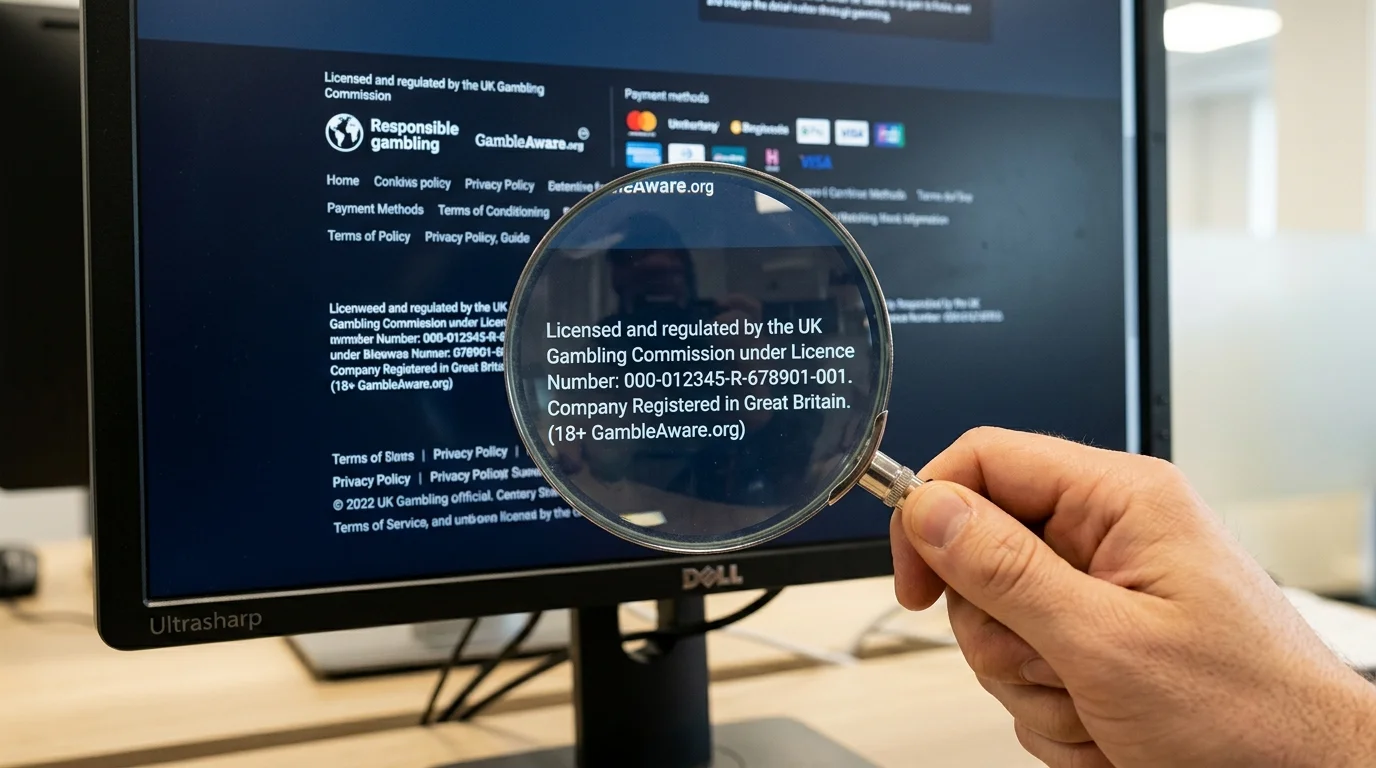
I’m going to ask you to do something tedious. Open the bookmaker app you most often use, scroll to the bottom of the homepage in the browser, and look for the UK Gambling Commission licence number. If you find it, click through to verify it’s currently active. If you don’t find it — visibly displayed, not buried behind three menu layers — you’re doing something I would not recommend, regardless of how well-known the brand sounds.
The UKGC licence does specific, enforceable things. It mandates segregated player funds, so money in your account is protected if the operator becomes insolvent. It enforces dispute resolution through the Independent Betting Adjudication Service. It mandates affordability checks, identity verification at deposit and withdrawal, and adherence to the Gambling Commission’s licence conditions and codes of practice. None of this exists at offshore operators marketing into the UK without a domestic licence.
What a UKGC licence buys you
Segregated player funds, mandatory ID verification, affordability checks, GAMSTOP self-exclusion participation, IBAS dispute resolution, advertising under the CAP Code and BGC voluntary rules, mandatory contribution to the Gambling Harms Levy administered by NHS England since April 2025.
What offshore “UK-facing” operators don’t offer
No domestic dispute path, no segregated funds requirement, no GAMSTOP integration, no enforceable advertising standards, no contribution to UK harm-reduction infrastructure, exposure to payment-processor seizure if regulator pressure increases.
Recent regulatory pressure
Stephanie Peacock MP, Minister for Gambling, told Parliament that only a combination of measures — from giving the Gambling Commission powers to crack down on the black market to restricting bonus and free bet offers — would bring regulation into the modern age and better protect people from harm.
I deliberately don’t publish a ranked list of “best NBA bookmakers” on this site. Any list of that sort is influenced, intentionally or not, by commercial arrangements between publisher and operator. The honest version is that the four or five largest UKGC-licensed operators offer broadly comparable NBA markets, with differences mostly in prop granularity, line-update speed, and cash-out interface. The single biggest determinant of which to pick is whether you’ll line-shop across two accounts (which I recommend) or stick with one.
Prediction Markets, Event Contracts and the Question UK Punters Keep Asking
One question I get more in 2026 than any other concerns prediction markets — Kalshi, Polymarket, the various US platforms built around “event contracts” rather than fixed-odds betting. You’re buying and selling shares in a binary outcome at prices that drift between zero and one dollar. Critics call it gambling in a regulatory bow tie. Supporters call it a legitimate derivative market. The Gambling Commission has a view that lands closer to the critics.
The UKGC’s official position, issued in February 2026, was unambiguous. Whilst the presentation of prediction markets may differ, the regulator stated, their core aspects are akin to what in the UK would be described as a betting exchange. As such, operators would require a betting intermediary gambling licence. Regardless of what the platform calls itself in US filings, if it takes bets on real-world events from a UK customer, it needs a UK licence. None of the major US prediction-market platforms currently hold one.
The American Gaming Association — whose chief executive Bill Miller called the battle against prediction markets a defining fight for the industry in his February 2026 state-of-the-industry address — has been pushing hard against the platforms in US courts. Former New Jersey Governor Chris Christie, now a strategic adviser to the AGA, put it characteristically: if it walks like a duck and quacks like a duck, he wrote, predictive market sites are offering sports gambling in violation of the laws of all 50 states.
For a UK punter, the takeaway is clean. Accessing a US prediction-market platform from the UK is legally murky at best. The Gambling Commission has signalled it considers these platforms to be operating gambling activities, which means using them as a UK resident puts you outside the protections — IBAS disputes, GAMSTOP, segregated funds — that the licensed market provides. Isaac Rose-Berman, a fellow at the American Institute for Boys and Men, captured the broader uneasiness in comments to Fortune: when you’re able to bet what the next pitch in a baseball game is going to be, he noted, that’s because Major League Baseball is selling data to platforms for a pretty high price.
The Part Most NBA Tipsters Skip Past in Two Sentences
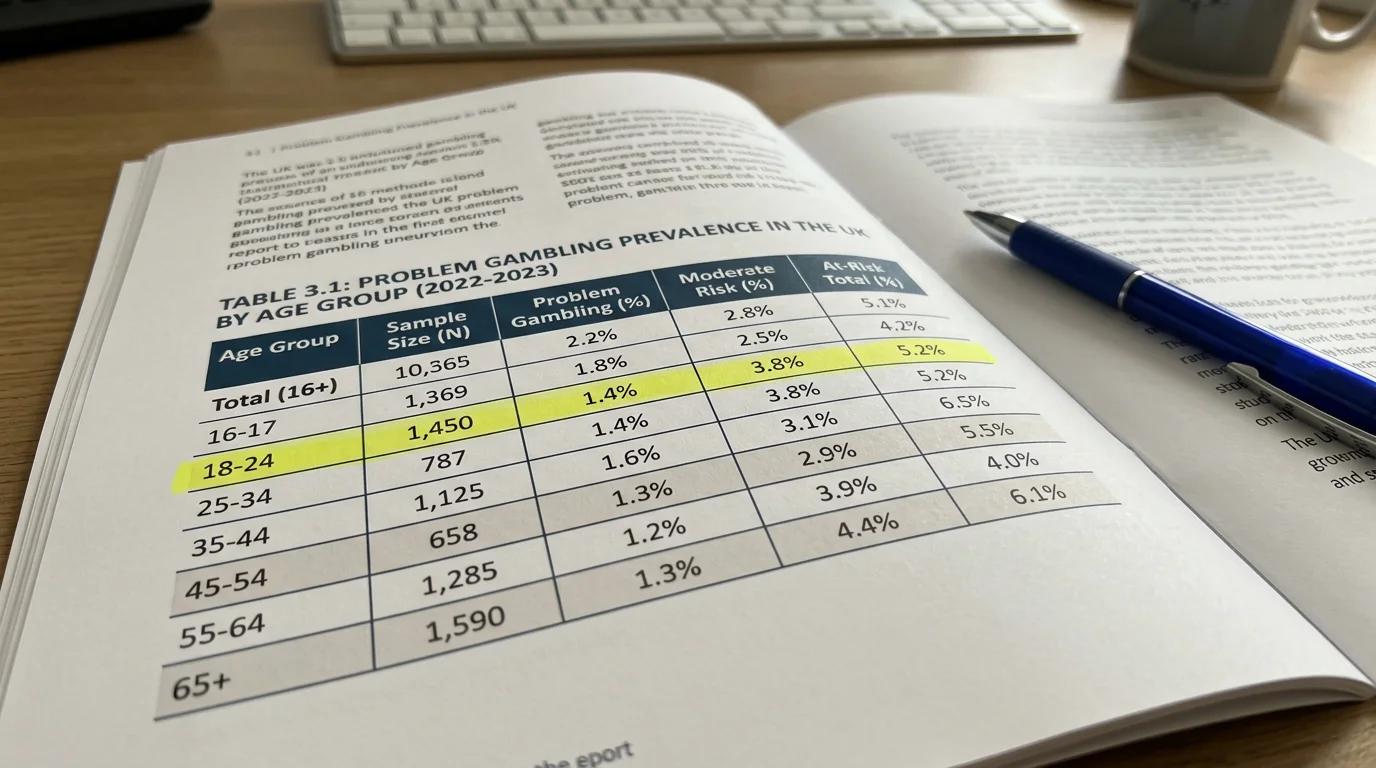
Every gambling site has a “be gambleaware” footer. Most mean it the way a fast-food chain means “please drink responsibly” on a milkshake: a legal formality. I’m going to spend more than a footer on this, because the numbers behind UK problem gambling are sharp enough that ignoring them would be dishonest, and the people most at risk are statistically more likely to be reading “NBA bet of the day” content than parliamentary submissions.
The starting figures. NHS Health Survey for England 2024 estimated around 5% of adults in England demonstrate at-risk or problem gambling behaviours. The clinical threshold is much narrower — the Adult Psychiatric Morbidity Survey found just 0.3% of adults meeting it. But the at-risk band is where damage compounds. 21.9% of British adults aged 18 to 24 have PGSI scores between 1 and 27, the highest share of any age group. The audience most engaged with US sports content in the UK skews young and male; the demographic with the highest at-risk share is young and predominantly male. The overlap is not coincidence.
Do
- Set a deposit limit on every UKGC-licensed account before you place a bet.
- Use the reality-check and time-out tools every licensed operator is required to offer.
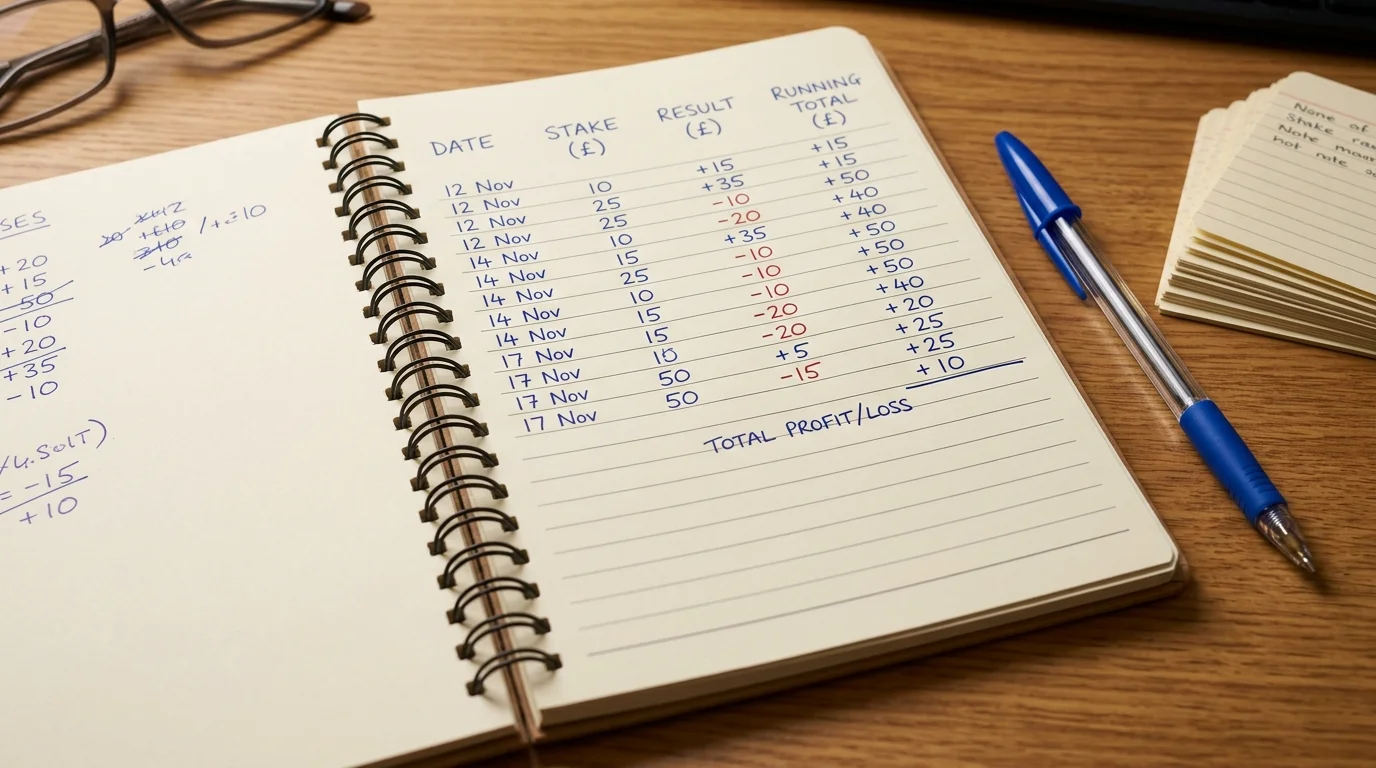
- Track every bet — stake, market, decimal odds, outcome — in a spreadsheet for a season and look at the actual ROI honestly.
- If your gambling is causing concern, use GAMSTOP to self-exclude across all UKGC operators at once.
- Talk to GamCare or the NHS National Gambling Treatment Service if you or someone you know is struggling.
Don’t
- Treat “free bet” offers as free money. The Gambling Commission notes people with a gambling problem are nine times more likely to receive a free-bet offer than the average customer.
- Chase losses across an overnight slate when you’ve lost the first three plays.
- Place bets at sizes you wouldn’t if you were sober and rested.
- Borrow money to fund a bet. Ever.
- Hide your gambling from a partner or family. Concealment is a flag every clinical screening tool uses, for good reason.

The infrastructure has changed materially. Between April and September 2024, nearly 2,000 patients were referred to specialised NHS gambling-addiction services compared to around 800 in the same period of 2023 — a 150% year-on-year increase. Since April 2025, NHS England has formally administered the Gambling Harms Levy, a statutory industry levy funding prevention, treatment and independent research.
Dr Heather Wardle of the London School of Hygiene and Tropical Medicine has been one of the more measured public voices on the normalisation involved. “It’s hard to prove what harm is being done because it’s a generational thing and the harm comes much further down the line,” she has noted. “We’re creating the conditions that normalise gambling for a generation.” That’s the context any honest NBA betting site should acknowledge.
How a Daily Pick Earns Its Place on This Site
I get asked, often, why this site doesn’t publish a daily list of seven or eight “picks of the day” the way the major US handicapping sites do. The honest answer: I don’t believe there are seven good NBA bets on a typical evening, and publishing a list of seven would be a lie I’m not willing to tell.
Here’s how the selection process actually works. Around midday UK time, I pull the slate and run a first-pass screen on every game. Most are eliminated within seconds: the closing line is already efficient enough that there’s no exploitable gap, a key injury status is too uncertain to model, or the bookmaker margin on the market I’d play is wide enough to eat any plausible edge. What’s left after the first pass is usually two or three games.
Daily slate funnel
Start with the full evening of NBA fixtures. Apply screen one (closing line efficiency, injury certainty, market margin). End the first pass with two to three candidate games.
Second-pass filter
Apply the seven-stage checklist from earlier. Most candidates die at stage two (EV gap less than 2.5%) or stage three (uncertain injury status).
Final selection
The single best risk-adjusted opportunity becomes the day’s pick. On roughly two days in five, no candidate clears the threshold and there is no pick. Not failure — the system working.
A daily NBA pick worth following is one where the analyst has shown their work: the gap between the model’s probability and the bookmaker’s implied probability, the source of that gap, and the stake size relative to bankroll. Anything less is opinion theatre.
Common Questions From UK Punters New to the NBA Slate
What is the NBA bet of the day and how is it chosen?
A “bet of the day” is a marketing wrapper around a specific concept: the single market on a daily slate where the analyst has identified the largest gap between bookmaker implied probability and the analyst’s modelled probability, adjusted for risk. A useful version quantifies and explains that gap. A useless version is a confident sentence next to a logo. On my methodology, around three nights in five produce no pick at all — the slate simply doesn’t offer enough edge to justify a stake.
What is the most profitable bet type in NBA betting?
For a disciplined punter, point spread and totals remain the two most studied and most exploitable markets. Margins on mainline spread and total markets typically sit between 3% and 6%, which is workable. Player props offer higher upside but carry margins of 8% to 14% or more — a meaningful tax. Same-game parlays are the least profitable: regulator data shows effective hold reaching 24.2% on parlay-style products versus 4.4% on singles.
Which UKGC-licensed bookmakers are best for NBA betting?
I deliberately don’t rank operators, because most published rankings carry undisclosed commercial influence. What I can tell you is what to look for: a clear UKGC licence number on the homepage footer, segregated player funds, GAMSTOP integration, IBAS dispute resolution, and competitive decimal odds on mainline NBA markets. The single biggest edge you can give yourself is opening accounts at two of them and line-shopping every bet.
How should a UK punter plan an NBA bet around the late-night tip-off window?
Most NBA tip-offs fall between midnight and 5 am UK time, which forces a choice: place pre-match while still awake, or attempt live betting through the night. Place the bet pre-match before midnight, having verified the late injury report at the 30-minute lock. Live betting overnight invites tired decision-making, and the bookmaker’s late-game margins are noticeably wider than the pre-match equivalents.
What is expected value and how do I find it on NBA games?
Expected value is the difference between your estimate of the true outcome probability and the bookmaker’s implied probability, multiplied by stake and payout. Three steps in order: convert decimal odds to implied probability (1 divided by the decimal price), strip the vig from the two-way market to find the no-vig fair line, then compare that fair line to your model probability. If your model gives the outcome a higher probability than the no-vig fair line, you have positive EV.
How accurate are NBA expert picks against the spread?
Across the major published handicapping services, long-term win rates against the spread cluster between 51% and 54%. At a typical price of 1.91, break-even is 52.4%. That means many daily tipsters aren’t actually beating the line over time, and even the best are operating on a 1-to-2 percentage point margin. The realistic question to ask any tipping service isn’t “what’s your win rate” but “what’s your closing-line value” — the gap between the price you bet and the price at tip-off.
Can I live-stream NBA games while betting in the UK?
Yes, with caveats. The NBA’s UK broadcast partnership with Prime Video runs through 2035-36 as part of the league’s 11-year, $76 billion rights cycle. Sky Sports also carries selected games. NBA League Pass is available in the UK, though some nationally televised games carry blackouts. Streaming latency — 30 seconds to a couple of minutes behind live play — is a meaningful disadvantage for live betting: by the time you see a make on screen, the market has already adjusted.
What Tonight Will Look Like When You Open Your Bookmaker App
If you’ve read this far, you already know more about how an NBA bet should be evaluated than the audience the average tipping page is written for. The slate tonight will have between six and fourteen games. Most will have closing spreads, totals and prop offerings priced to within a percentage point of the consensus the market actually believes. A small number — usually one or two — will have a line that hasn’t caught up to a piece of information the bookmaker’s trading team hasn’t fully integrated yet. The rest is expensive entertainment.
The mental script I run when I open the app, in this order: check the published injury report on NBA.com first, not the bookmaker’s. Look at pace-rest combinations across both teams. Strip the vig on any two-way market I’m considering. Compare implied probability to my own estimate honestly. If the gap is real and survives the seven-stage checklist, I size the stake to a fixed percentage of bankroll, place the bet, and walk away. If the gap isn’t real, I close the app.
One last thought. The thing I most wish I had understood ten years ago is that the goal isn’t to beat the bookmaker every night. The goal is to have a defensible reason for every bet you place, to size each stake so a bad night doesn’t matter, and to walk away from the slate when it doesn’t give you what you’re looking for. That sounds anticlimactic next to a confident “bet of the day” headline. It’s also the only thing that produces results across a season — and, eventually, across a decade.
Created by the ”nba bet of the day” editorial team.