Market Responses to NBA Load Management and Late Scratches
 Available in US
Line Movements: Reacting Instantly to Star Player Injury Scratches
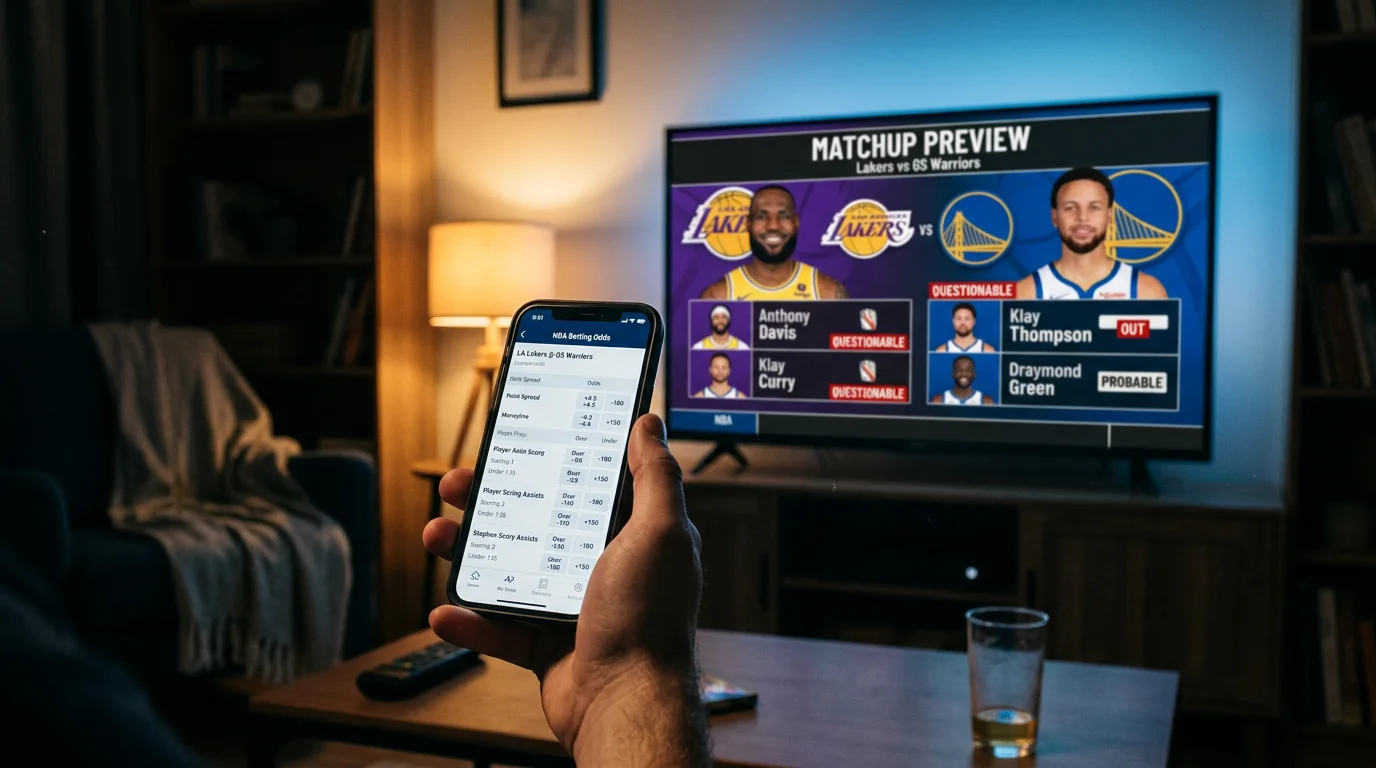
I remember the exact moment in February 2023 when I learned how fast load management moves a UK NBA line. Nikola Jokic was listed as questionable on the injury report at 10am UK. At 11:47pm UK – 12 minutes before tip-off in Denver – he was downgraded to out. By 11:48pm, three of the five UK books I monitor had pulled the line entirely. By 11:50pm, the line came back at minus 2 instead of minus 7.5. A five-and-a-half point move in 90 seconds. I had a position on the Nuggets at minus 7.5 that suddenly looked very wrong, and a window of about 30 seconds where the alternate lines on Murray and Porter were still tradeable at their pre-scratch numbers.
That moment compressed everything I’d been learning about load management into a single trade. The NBA’s rest-and-scratch landscape is one of the largest betting variables in the sport, and the UK punter – operating in the overnight window when human traders at British books are thinnest on the ground – sits at the centre of the disruption. The story of UK NBA betting in the second half of the 2020s is, in significant part, the story of how books and punters adapt to a sport where star availability is partly a strategic choice made by the team rather than a fixed input to the line.
The NBA’s load management policy and where it stands
The NBA implemented a formal player participation policy ahead of the 2023-24 season, tightening the rules around resting healthy stars during nationally televised games and prohibiting franchises from sitting multiple star players in the same contest. The policy carries financial penalties for violations and was designed primarily to protect the league’s broadcast partners and ticket holders – not directly to help bettors, though we benefited indirectly from the increased certainty around star availability for marquee fixtures.
The policy’s practical effect has been mixed. Star availability for nationally televised games has improved markedly. For non-televised games – the bulk of the regular-season slate – the picture is more nuanced. Teams have become more strategic about which non-marquee games they rest stars in, and the available list dropping at the 30-minute pre-tip mark remains a meaningful weekly disruption to the betting market.
The NBA’s pace explosion has fed into the load-management calculation. League pace hit 101.9 possessions per 48 minutes in the early 2025-26 season, the highest mark in 30 years of play-by-play data. The physical toll on stars in a higher-pace, higher-volume league is real, and franchises have responded by managing minutes and rest days more aggressively. For UK punters, the implication is that load management is structural rather than situational – it’s a permanent feature of the modern NBA, not a phase the league is going through.
Back-to-back and schedule loss as a betting input
The single most predictable load-management situation is the back-to-back. Stars rest the second night more than 30 percent of the time across the league average, and the rate climbs higher for veteran players over 30, for players with documented injury histories, and for teams not in immediate playoff contention.
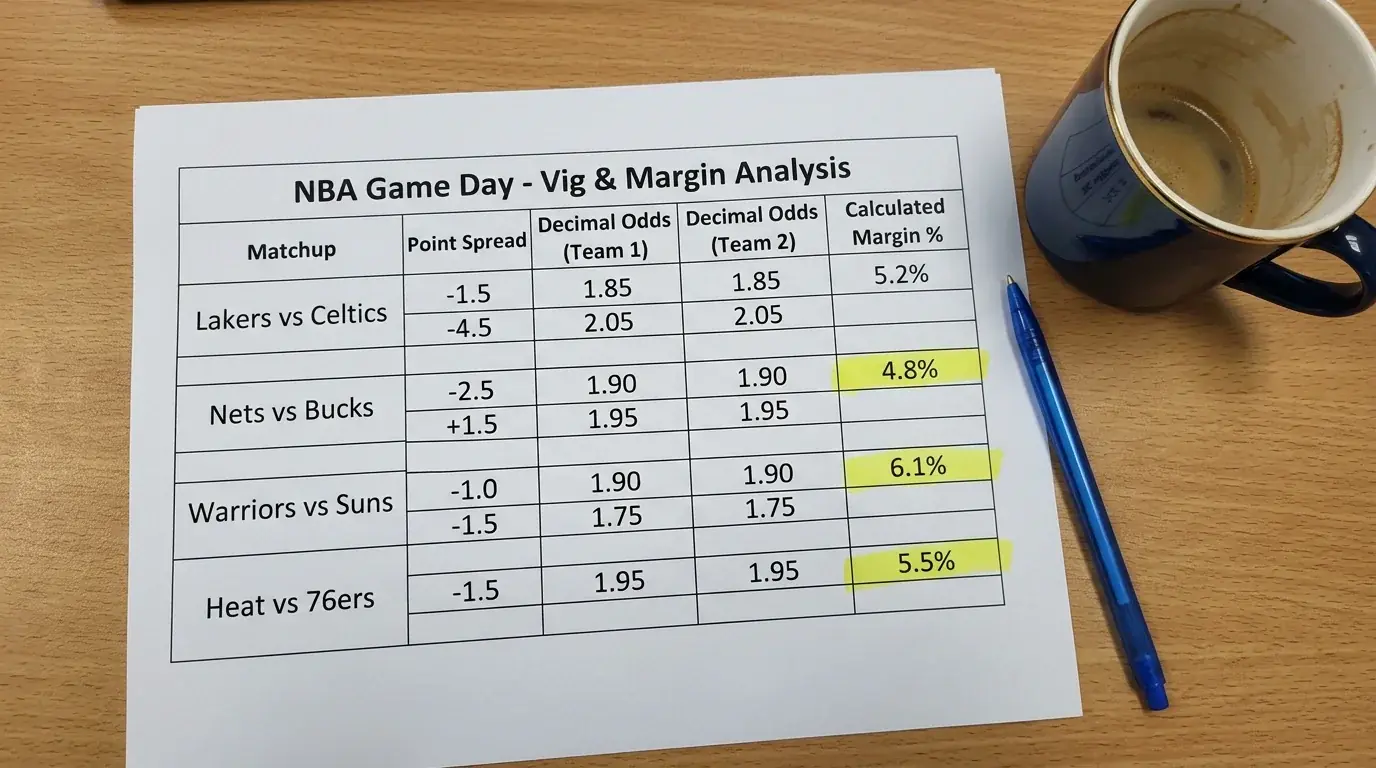
The betting implications stack in two directions. First, the closing line on a second-of-back-to-back game incorporates significant uncertainty about star availability – books typically post these lines with wider buffers than equivalent rested-team games. Second, the line moves more sharply on these games when the injury report drops, because the share of the bet that depends on a specific player’s presence is larger.
The data on schedule loss specifically – the win-rate degradation a team experiences on a back-to-back versus a rested night – is hotly debated, with values typically cited in the 4 to 7 percent range depending on the underlying model. The structural decline of home-court advantage in modern NBA, with the average win percentage at home in the 2020s sitting at 55.1 percent against 66.2 percent in the 1980s, complicates the calculation: home advantage and rest advantage interact in ways that make any single isolated schedule-loss number imprecise.
For UK punters, the actionable habit is to flag back-to-back games on your slate in advance and apply slightly tighter staking discipline to them. The volatility is higher, the late-news risk is higher, and the bookmaker is pricing all of that into the line. Adam Silver framed the integrity dimension of star availability bluntly: “there’s nothing more important to the league and its fans than the integrity of the competition.” The line between strategic rest and integrity concern is a live debate at the league level, and the load-management policy is one expression of how the league is trying to manage it.
Prop fallout on late scratches
The line moves fast on a star scratch. The prop market moves faster, and in more directions, because every individual rotation prop is now repricing based on the new minutes distribution.
The cascade. Star A gets scratched 30 minutes before tip-off. The mainline spread moves immediately – typically 3 to 6 points depending on the player’s Net Rating impact. Every prop on Star A voids. Props on the player most likely to inherit Star A’s usage – typically a backup or a small-ball big – repush upward. Props on second and third bench players who benefit from rotation reshuffling also move. Props on Star A’s primary defensive matchup adjust because the matchup just changed. Within five minutes of the scratch, dozens of individual prop lines have moved by 10 to 30 percent.
The window for opportunistic prop betting is the gap between the scratch hitting the wire and the bookmaker re-pricing every affected market. Most UK books pull props within seconds of a major scratch, but the pull-and-reopen cycle takes several minutes, and the new lines posted after the cycle are often less efficient than the old lines were before – because the bookmaker has had to reprice quickly under pressure, and the volume coming in is one-directional from punters who’ve spotted the cascade.
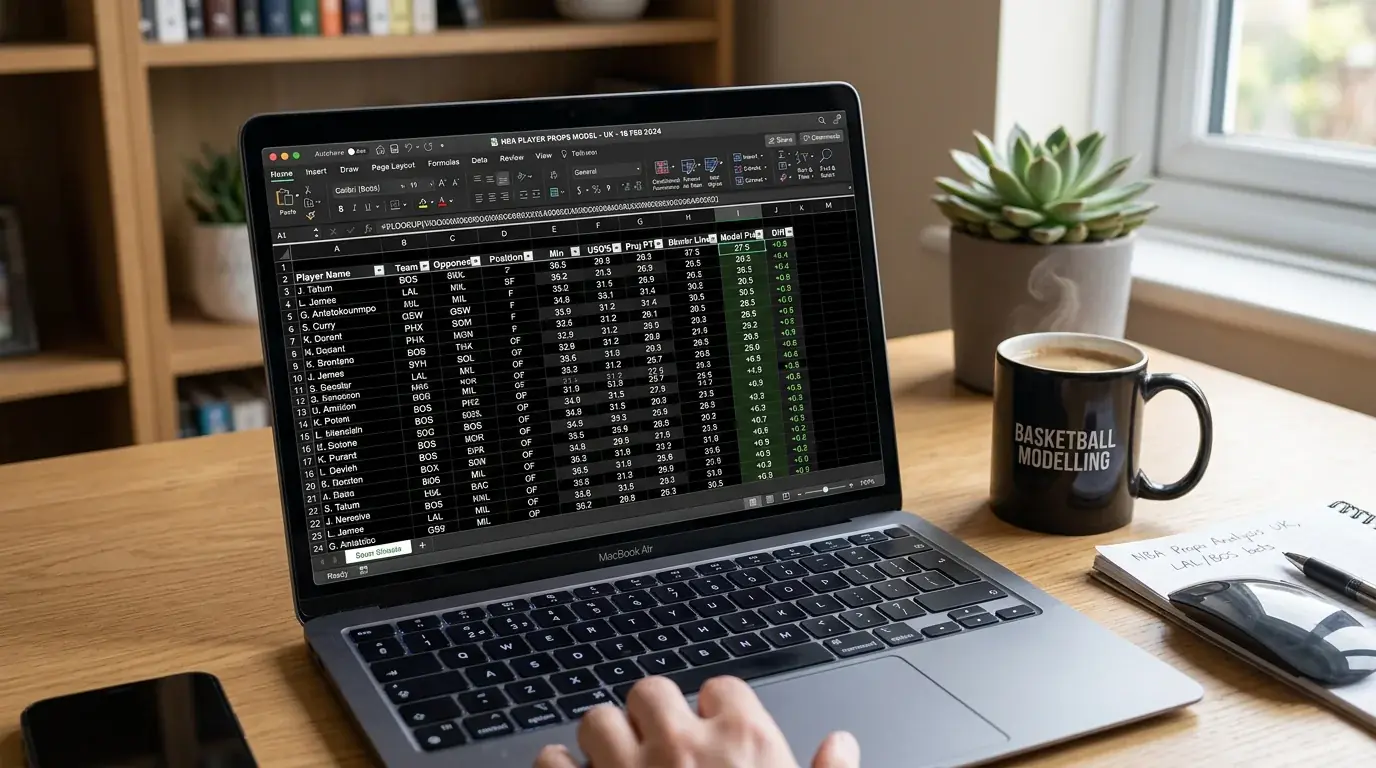
I want to be honest about how this looks for me. Most of my prop edge against the late-scratch market has come from prepared “if-X-scratches-then-bet-Y” workflows that I’ve built before tip-off. The improvisation in the live window rarely beats the preparation. Sitting at my desk at 11pm UK with a pre-written matrix of “if LeBron is out, the best bets are X, Y, and Z; if AD is out, the best bets are A, B, and C” is the only reliable way to capture the post-scratch value. The IF column is data-and-projection work I do hours in advance; the THEN column is the trade I execute when the news hits. Without the IF column, the THEN column is just gambling on whichever line my finger lands on.
Injury report timing versus UK tip-off windows
The NBA’s injury report follows a fixed schedule. An initial report drops at 5pm local time the day before each game. Updates land at 11am local time on game day. The final pre-game report drops at 30 minutes before tip-off, by which point all designations are final unless a player is downgraded from “questionable” to “out” intraday.
Translated to UK time, this is awkward. For an East Coast game tipping at 7:30pm local – 12:30am UK – the final report drops at 12am UK. For a West Coast game tipping at 10:30pm local – 6:30am UK the following morning – the final report drops at 6am UK. The bulk of UK NBA punters are either in bed or about to be when the most important pre-game information lands.
The audience side of the UK NBA story makes this an increasing problem. NBA viewership on Prime Video UK was up 312 percent year on year in the first season of the league’s 11-year UK deal, and NBA App viewership in the UK is up 52 percent year on year with average time spent rising 24 percent. The UK audience is real, growing, and increasingly engaged – but the operating realities of US-based sport on a 5-to-8-hour time shift mean the bet-building window and the news-arrival window don’t overlap cleanly.
The workable adaptation. For any game I’m seriously betting, I either stay up to monitor the final report in real time, or I pre-place limit-style bets through structures the bookmaker offers (alternate lines, bet builders that lock in at point of placement) and accept that any post-final-report news swing will play through my position without me. The discipline that broke my betting in my late twenties – staying up until 4am to watch a game I’d bet on – has been replaced by a discipline of preparation: do the work before midnight, set the alarm for 7am, accept that the night belongs to the line. The connection between scratch timing and how UK books actually lock their lines is something I unpack in my piece on reading the NBA injury report on UK time.
How quickly do UK bookmakers move the spread when a star is downgraded to questionable?
The first move usually happens within 60 to 120 seconds of the wire confirming the downgrade, with major UK books either pulling the line entirely while they reprice or moving the spread by 1 to 3 points immediately. A full reprice across all affected markets – mainline, props, alternate lines, team totals – typically completes within 5 to 8 minutes. Books with thinner overnight trading desks move slower, which is why the price disparity across UK operators briefly widens after major late news. Limits often tighten during the reprice window.
Are back-to-back NBA games predictable enough to fade systematically?
The win-rate degradation for teams on the second of a back-to-back is real but modest, with most credible models placing it in the 4 to 7 percent range depending on the underlying assumptions. The bookmaker prices that degradation into the line, which means fading back-to-backs systematically doesn’t work – you need additional information about specific player rest decisions, rotation health, or matchup edges. The structural decline of home-court advantage in the modern NBA complicates the calculation further, because the rested team’s home edge is smaller than it used to be.
Written by the editors at nba bet of the day.