NBA Team Totals as a UK Betting Market
 Available in US
- The market hiding inside the total
- The independence problem
- The vig differential
- Pace mismatch is the cleanest signal
- Blowout candidates and the under play
- The injury asymmetry
- Live team totals and the role swap
- The team-total parlay trap
- Where team totals fit in a portfolio
- The lesson the missed game total taught
The market hiding inside the total
I started taking NBA team totals seriously after losing a game total bet on a game that ended 132-93. My over had needed 225 points combined and it landed at 225 exactly – pushed. But I had been certain one team would not crack 100, and they did not. If I had bet the team total under, I would have won comfortably. That experience reshaped how I think about totals: the game total is the average of two team-level questions, and sometimes one of those questions is clearer than the combined one.
Team totals are bets on whether a specific team will score over or under a specific number. They are derived from the game total and the spread – a 230 total game with a 6-point favourite implies team totals of 118 and 112, give or take. The book offers them as separate markets and prices them with their own margin layered on top.
The independence problem
Team totals do not move independently of game totals and spreads. If the game total moves, both team totals move with it. If the spread moves, the team totals adjust to maintain the mathematical relationship. This means team total markets are sometimes redundant with markets you already have access to, and the question is whether the team total carries information the combined markets do not.
Where team totals add value: when your projection diverges from the implied relationship between the spread and the total. If you think one team will score significantly more or less than implied while the other team will compensate in the opposite direction, the game total stays in range but the team totals offer two separate edges. This is the bettor’s opportunity to express a more specific opinion than spread or total alone allows.
Example: you think a high-octane offence is going to put up 130 against a defence designed to slow them down. If their opponent struggles to score, the game total might land near the projection – but your specific belief is about the offence, not the game. The team total over captures that specific belief without requiring the opponent’s scoring to cooperate.
The vig differential
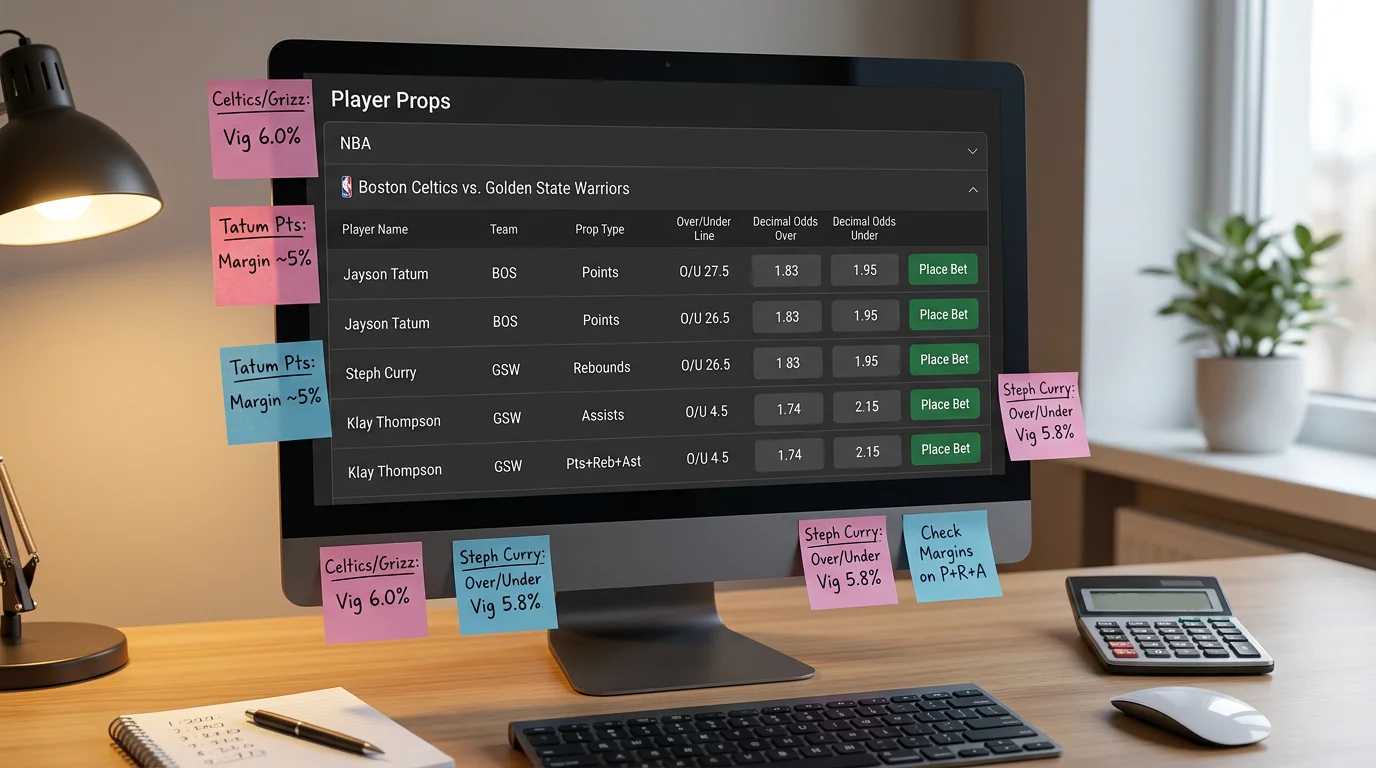
UK books typically charge slightly higher vig on team totals than on full-game totals. The hold on a main-line full-game total runs around 4 to 5 percent; team totals can run 6 to 8 percent. That difference is the cost of expressing the more specific opinion, and it matters when calculating whether the edge you have justifies the bet.
For a team total bet to be worth the extra vig, your edge versus the line needs to be larger than it would on the equivalent full-game bet. Half a point of edge on a full-game total might be borderline bettable; the same half point on a team total is usually not enough, because the additional vig swallows the edge. The threshold for me is at least three points of disagreement between my team total projection and the line.
This thresholds out a lot of bets, which is fine. The team total market is not a daily volume market. It is a targeted market for specific situational reads where the analytical work is dense.
Pace mismatch is the cleanest signal
Team totals are most exploitable in pace-mismatch games – a fast team against a slow team, where the conventional wisdom averages the two paces but the reality is that pace tends closer to the faster team’s number. The fast team scores more than the implied team total. The slow team also often scores more, because they are getting more possessions than their season pace would suggest.
This is the same effect that creates value on full-game overs in pace-mismatch games. Team totals let you split the bet: take both team total overs, or pick the side where the divergence is largest. The fast team’s over is usually the cleaner bet because it depends only on possessions, not on the slow team adapting to a higher tempo.
The work to identify these spots: track team pace ranks over the past 10 games, not season-long. Identify games where the gap between teams is 5-plus ranks. Confirm the line has not been adjusted for the mismatch – typically it has not, because team total lines are built mechanically from spread and total, and those lines do not always reflect pace asymmetry correctly.
Blowout candidates and the under play
A team that is a heavy favourite in a likely blowout often has a team total under as the better play, not over. The reasoning is counterintuitive but consistent: blowouts produce extended rest for starters, garbage time with backups, and reduced shot volume from the team that is comfortably ahead. The favourite’s team total assumes 38 minutes from the starters; in a blowout, they play 28.
The market does not always price this correctly. A team projected to win by 14 might have a team total of 120, but in actual blowouts they often score 110 to 115 because of the rotation pattern in the second half. The under is the bet, especially against opponents who are themselves likely to be uncompetitive enough to trigger the early rest pattern.
This requires a confident view on which side of the matchup will be the runaway. A coin-flip 14-point spread is not a confident blowout projection. A line that should be 18 but is sitting at 14 because of public action on the favourite is a confident blowout projection. The work is in disagreeing with the line for the right reasons.
The injury asymmetry
Team totals react to injury news in interesting ways. If a star scorer is questionable, the line moves down on that team’s total. But often the line does not move enough, because the team’s other players will absorb shot attempts and the team-level scoring degrades less than the individual-level scoring of the missing star would suggest.
The reverse can also be true. A team with a star out is often projected as if their backup will produce similar output, which is rarely the case. The team total under can be the bet when the backup is genuinely much worse, the shot redistribution does not work, and the team scores 8 to 12 points below its normal output rather than the 4 to 6 the line is implying.
Reading injury reports is where this work begins, and it ties directly to the timing of late-breaking news from a UK perspective. The bettors who get to injury-affected team totals first capture the edge before the line moves. The bettors who wait for the line to settle are betting after the inefficiency has corrected.
Live team totals and the role swap
Live team totals are a market most UK bettors ignore, partly because the lines update less frequently than full-game totals and partly because the volume is too low to justify the trading attention. This is the source of the inefficiency.
The classic live team total spot: a team falls behind by 15 early, the live line drops their team total significantly, and the projection becomes too pessimistic for a 36-minute game with three quarters still to play. NBA scoring is high enough that recovery from a 15-point deficit usually produces close-to-projected scoring totals, even if the win-loss outcome does not change. The team-total under sometimes overcorrects on early deficits, and the live over becomes the bet.
The reverse spot: a team builds a big early lead and the live total holds their projection at full level. If the lead is large enough to trigger early rest of starters, the team total under is the live bet – the market has not yet absorbed the blowout-driven rotation pattern.
The team-total parlay trap
UK books promote team total parlays heavily – combine both team’s overs, or both team’s unders, for boosted odds. The maths is the same as any other parlay: combined margin is much higher than the singles, expected value is much lower, and the structural reason books push these is that they print money for the books.
The exception is correlated parlays. If both teams play in a high-pace environment, both team totals over is a correlated bet – they are mathematically linked through the shared pace input. Books that price correlated parlays as uncorrelated are giving away value. Books that price them correctly remove the only legitimate parlay edge, which is most UK operators.
If a book accepts a correlated team-total parlay at standard parlay pricing, take it when the underlying edge supports it. If they price it down or refuse the bet, leave it. The structural game here is whether the book has noticed the correlation. Some have. Many have not.
Where team totals fit in a portfolio
Team totals are a niche allocation in my NBA betting portfolio. Most weeks I might place 3 to 5 team total bets across the schedule, against 20-plus spread bets and 10-plus full-game total bets. The market is not a primary one because the edge opportunities are scarcer and the vig is higher than the main markets.
Where it earns its place: specific situational reads that the full-game total cannot capture, blowout-projection unders that the spread market has not fully reflected, and live overcorrections after early deficits. These are not high-frequency setups. They are the spots where the team total market expresses an opinion that no other market can express as cleanly.
The lesson the missed game total taught
Returning to the 132-93 game that started this. The lesson was not that team totals are a better market than full-game totals. The lesson was that sometimes my conviction is specific to one side of the game, and forcing that conviction into a full-game total dilutes it. The team total market lets you bet your actual opinion rather than an averaged version of it, when your opinion has that level of resolution.
That precision is the entire reason this market exists, and the entire reason it pays for bettors who do the situational work. The bettors who treat team totals as just another over/under to gamble on are losing slightly more than they would on full-game totals because of the vig differential. The bettors who use the market deliberately, for the specific spots where it matters, are extracting edge that no other market exposes. The discipline is in knowing which kind of bettor you are being on any given night.
What is the typical vig on NBA team totals?
Around 6 to 8 percent at UK books, compared to 4 to 5 percent on full-game totals. The higher cost reflects the more specific nature of the bet and the lower trading volume in the market.
When should I bet a team total instead of a full-game total?
When your projection diverges from the implied team-level scoring more than from the game total – usually in pace-mismatch games, blowout candidates, or injury-affected matchups.
Can I parlay team totals from the same game?
UK books typically allow it but price the parlay aggressively. The bet is only worth taking when the correlation between the two team totals is not priced in, which most books now catch.
Created by the ”nba bet of the day” editorial team.