Verifying UKGC Licensing for Secure NBA Betting
 Available in US
Regulatory Protection: Using IBAS Dispute Resolution on Licensed Sites
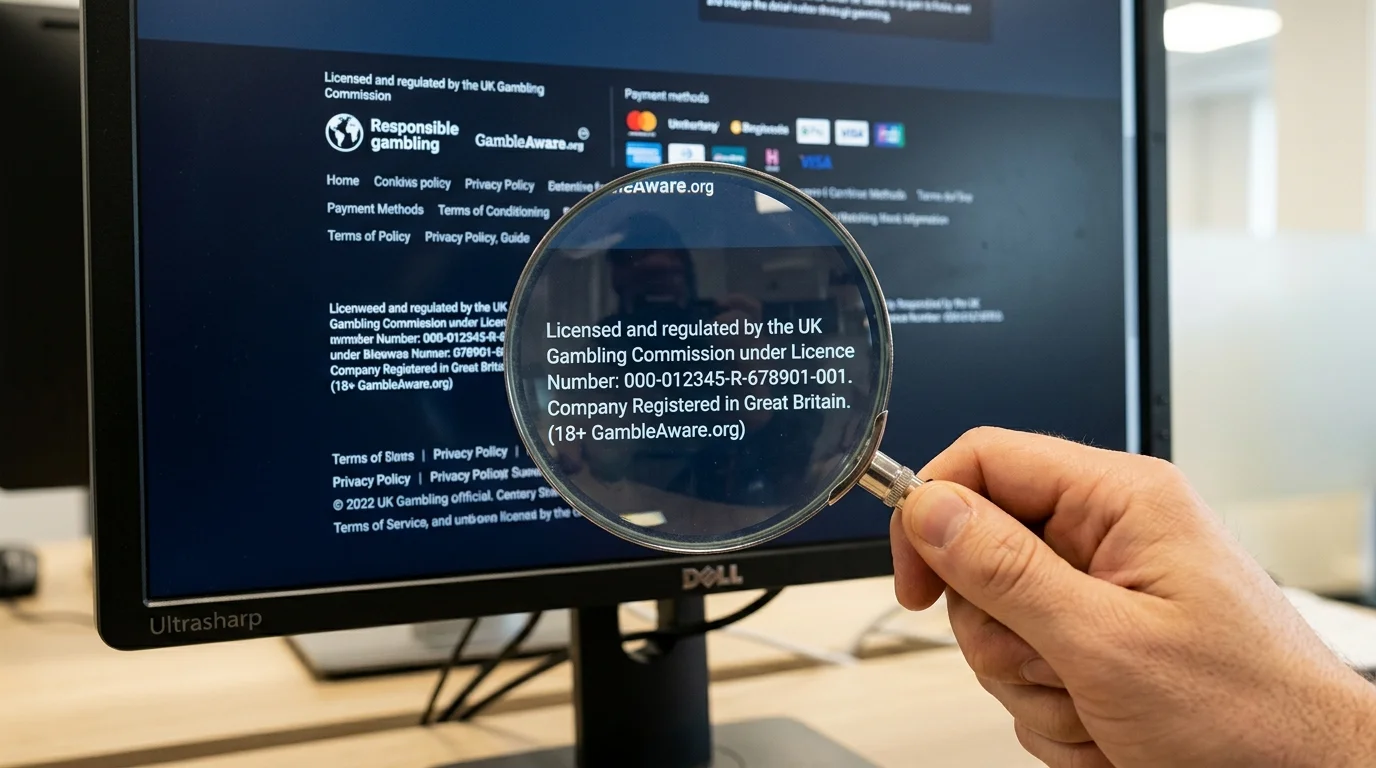
I have a slightly anal-retentive habit. Before I deposit a penny into any new sportsbook, I scroll to the bottom of the homepage, find the UK Gambling Commission account number, and click through to the public register to verify it. Twelve seconds, every time. In a decade of doing this, I have caught two clones with lifted footer logos that linked nowhere, and I have walked away from both with my card details intact.
That is the unglamorous reality of the UKGC licence. It is not a guarantee that you will win. It is not even a guarantee that you will love the product. What it is, specifically, is a legal contract between the bookmaker and the British state about how they handle your money, your data, your disputes, and your wellbeing. The whole regulated UK gambling industry generated £15.6 billion in gross gambling yield in the financial year to March 2025, up 7.7 percent on the year before. That number exists because the licence is enforced. Outside the licence, you’re in a different market entirely – H2 Gambling Capital pegged the UK unlicensed market at £16.6 billion in 2025, more than triple the figure from 2019.
What the UKGC licence actually covers
The licence is broader than most punters realise, and narrower than the marketing wants you to believe.
On the breadth side, it covers customer funds segregation, anti-money-laundering checks, advertising standards, source-of-funds verification, gambling-harm interventions, dispute resolution pathways, and game-fairness oversight. When the Commission grants an operating licence, the operator commits to a long list of Licence Conditions and Codes of Practice – known internally as the LCCP. Those conditions cover everything from how a deposit limit must be honoured to how marketing communications must be worded. The Gambling Commission, in its public statements through 2025 and into 2026, has been explicit that even prediction markets, where they operate in a way comparable to UK betting exchanges, would require a betting intermediary licence to legally serve UK customers.
On the narrower side, the licence does not protect you from a bad bet. It does not refund losing wagers. It does not vouch for the accuracy of odds, the speed of cash-out, or the friendliness of the trading team. It does not stop a bookmaker from restricting your stakes if they decide you’re too sharp. The licence is a process guarantee, not an outcome guarantee.
For NBA punters specifically, three pieces of the LCCP matter most. First, the requirement to keep customer funds in segregated accounts – your unsettled NBA bet on Game 7 cannot legally be used to fund the bookmaker’s payroll. Second, the dispute resolution requirement: every UKGC licensee must offer access to an approved alternative dispute resolution provider for unresolved complaints. Third, the safer-gambling obligations, which since April 2025 are partially funded by the statutory Gambling Harms Levy, with NHS England now formally administering the treatment and prevention spend.
Verifying the licence number before you deposit
The check itself is mechanical, and you should treat it as a habit, not a sometimes-thing.
Every UKGC-licensed operator must display its account number and a link to the public register on its UK-facing site. The public register lives on the Gambling Commission’s own domain and is searchable by account number, operator name, or trading name. Search by the account number, not the brand – clones impersonate brand names, they don’t fabricate account numbers that resolve to the right company.
When the register page loads, three things should line up. The operator’s legal entity name should match what’s in the bookmaker’s terms and conditions. The trading names listed under the account should include the brand you’re depositing with – large operators run dozens of brands under a single licence, which is completely normal. The licence status should read as active, not suspended, lapsed, or under review. If any of those three checks fails, the deposit doesn’t happen. I have seen perfectly real licences in suspended state, where the operator was still accepting deposits while their UK book was unwinding. That ends badly.
One additional verification step that catches sophisticated clones: confirm the website domain. Real UKGC operators run a tight set of recognised domains; clones often live on near-miss URLs with extra letters, hyphens, or country codes. A footer that says “licensed by the UKGC, account 12345” on a domain the register doesn’t link back to is the most common impersonation pattern. The register page typically lists the verified domains directly.
The dispute pathway and how IBAS actually works
I lost a £180 NBA prop dispute in 2019. Two-way player, last-second substitution, ambiguous wording in the bookmaker’s rules. The internal complaints team sided with themselves, as internal complaints teams tend to do. I escalated to the Independent Betting Adjudication Service – IBAS – and four weeks later they ruled in my favour. The bookmaker paid out without protest. I have run perhaps fifteen IBAS cases since then, and won about a third. That ratio tells you exactly what the service is and isn’t.
Every UKGC licensee for sportsbook activity must be a member of an approved alternative dispute resolution provider. For betting, that is almost universally IBAS. The service is free to use as a customer. You file a complaint online, the bookmaker responds with their evidence, you respond to their response, and an adjudicator rules. The ruling is binding on the bookmaker but not on you – if you lose, you can still pursue civil action, though almost no one does.
The catch is that IBAS adjudicates based on the bookmaker’s published rules at the time the bet was placed. If the rules say “void if player plays fewer than 5 minutes” and your player played four minutes and fifty-eight seconds, you will lose the case even if the spirit of the bet was obvious. This is why I have a folder on my desktop with screenshots of every NBA prop rulebook from every account I hold – not because I expect a dispute on every bet, but because the rulebooks change quietly and the version that mattered is the one live when you struck the bet.
For NBA specifically, the disputes IBAS sees most often are prop settlement edge cases: DNP-CD designations, garbage-time stat padding pushed across a threshold, late lineup changes, and challenged stat corrections. The Adam Silver-era league office has tightened official stat reconciliation, which has reduced ambiguity, but the gap between the bookmaker’s settlement source and the box-score-corrected number still produces three or four disputes a season for any active prop punter.
Offshore versus UKGC – what you actually trade away
Some UK punters use offshore books. The temptation is real: bigger limits, fewer KYC hoops, occasionally sharper lines, and a sportsbook that won’t restrict you for winning. The trade-off is the part of the licence you give up.
When the offshore site doesn’t pay, you have no IBAS pathway. You have no UKGC complaints route. You have no segregated-funds protection. Your only recourse is a civil claim in whatever jurisdiction the operator is registered in, which for most Curacao or Caribbean licensees is functionally no recourse at all. I have watched friends lose four-figure balances to offshore exits and recover precisely zero pounds.
The Treasury’s increase to Remote Gaming Duty pushes some operators offshore-ward by tightening domestic margins. The Office for Budget Responsibility’s projections published in late 2025 estimated up to £500 million of yield could leak to the black market under the new 40 percent rate, and the Treasury earmarked £26 million for the Gambling Commission to combat unlicensed operation. That tells you the direction of travel: the regulator expects more offshore activity, and they are funding enforcement to push back. Whichever side of that fight you end up on as a punter, you should know which side you are on.
If you have decided your edge is large enough that offshore is worth the risk, fine – but it is a different calculation than “the licence is just a logo”. The licence is the difference between a structured dispute process and an inbox-ignored email. For most UK NBA punters at recreational stakes, that difference is the whole game. The other half of the licensing story is what happens when you don’t have one, and I cover that in detail in the piece on black-market NBA betting risks in the UK.
How do I confirm a bookmaker’s UKGC licence number is currently active?
Take the account number displayed on the bookmaker’s UK footer, open the Gambling Commission public register on gamblingcommission.gov.uk, and search by that number. The register will show the operator’s legal entity, the licensed trading names, the status, and the verified domains. The status field must read as active for the licence to be valid right now. Suspended or lapsed licences still produce footer references but mean the operator cannot lawfully accept new bets from UK customers.
What protections does a UKGC licence add specifically for NBA prop disputes?
Three protections matter on NBA props in particular. First, the operator must keep your unsettled stake in a segregated client account, so it survives even if the bookmaker has solvency trouble. Second, the operator must follow its own published settlement rules – IBAS will hold them to the version live at the time you placed the bet. Third, you get a free, binding-on-the-bookmaker adjudication path through IBAS if the internal complaints team refuses to budge, which is exactly the situation most NBA prop disputes end up in.
Prepared by the nba bet of the day editorial staff.