NBA First-Half Betting Strategy for UK Bettors
 Available in US
- Why I bet more first halves than fourth quarters
- The split that defines the market
- First-half spreads and the starter discount
- Pace asymmetry shows up most clearly in first halves
- Referee assignments and first-half scoring
- The Friday and Sunday patterns
- Live first-half betting and the late-half window
- The second-half setup play
- Where first-half markets sit in a portfolio
- The clean window the market gives you
Why I bet more first halves than fourth quarters
For three seasons I tried to find an edge in fourth-quarter NBA markets. I got crushed. The volatility was too high, the lines too sharp, the information environment too dependent on context I could not predict. I migrated those bets to the first-half market, and the results improved immediately. Same handicapping inputs, different segment, dramatically better outcomes. The reason is structural and worth understanding.
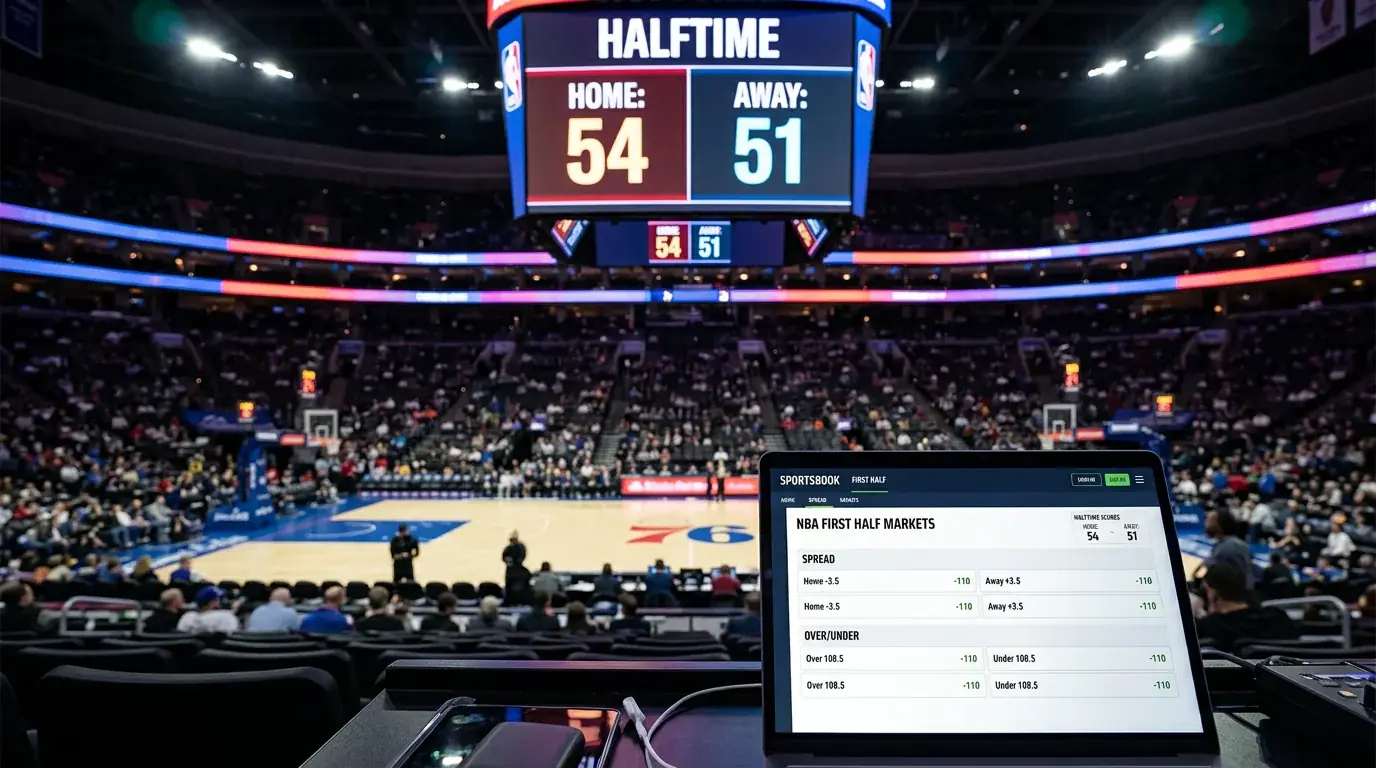
First-half betting in NBA markets – covering the first two quarters – is one of the more analytically tractable segments. The starters are on the floor for most of the 24 minutes. Rotation patterns are predictable. Fatigue is not yet a factor. The information you have about each team’s offensive and defensive identity translates cleanly into projections, because the units producing those projections are actually playing.
The split that defines the market
Roughly 48 to 52 percent of full-game scoring happens in the first half, with the second half slightly higher due to free throw rate increases late in close games and comeback attempts inflating scoring in non-blowouts. The market prices first-half totals around that split: a 230 full-game total typically produces a first-half line of 117 to 119.
What this means: if your full-game projection is calibrated, your first-half projection is roughly the full-game number times 0.50 to 0.52, with adjustments for situational factors. The adjustments are where the analytical work happens, because the market sometimes mechanically applies the 0.51 ratio and misses situations where the actual first-half share will deviate.
Typical situations producing higher than expected first-half share: heavy favourites likely to coast in the second half, low-pace teams that grind down the back half of games, defensive matchups that get even slower as conditioning fatigue accumulates. Situations producing lower than expected first-half share: blowout candidates from the underdog perspective (catching up later), high-pace teams that accelerate as defences tire, comeback-prone teams that struggle out of the gates.
First-half spreads and the starter discount
First-half spreads usually run at about 55 to 60 percent of the full-game spread. A 6-point full-game favourite is typically a 3.5-point first-half favourite. The relationship is not exact because some teams are stronger relative to opponents with both starting fives on the floor than they are once bench depth gets involved.
Teams with strong starting fives and weak benches are better first-half bets than full-game bets. Their advantage is concentrated in the first 24 minutes, when their best players are playing. By the time the bench unit cycles in, the gap narrows or reverses, and the full-game spread reflects that averaged dynamic. The first-half spread isolates the starter advantage.
The reverse is also true. Teams with deep benches and average starting fives are worse first-half bets than full-game bets. Their advantage emerges over the full 48 minutes through the bench unit’s contribution. Betting them in the first half gives away the depth advantage that justifies the full-game number.
Pace asymmetry shows up most clearly in first halves
The pace mismatch pattern I described earlier in totals work – fast team versus slow team producing higher pace than the simple average – shows up most cleanly in first-half data. Both teams are playing their starters, the pace negotiation between styles is fully active, and the result is usually closer to the faster team’s pace than the average.
The 2025-26 league pace of 101.9 possessions per 48 is an average across all teams. The fastest teams run at 105-plus, the slowest at 97. A first-half between a 105 team and a 97 team will usually run closer to 103 than 101, with the result being 8 to 10 more first-half possessions per team than the slow team’s season average would suggest.
The first-half over in pace-mismatch games is one of the few NBA betting patterns I have tracked across multiple seasons that consistently shows positive expected value. The market sometimes catches it, sometimes does not. The work is in identifying which games qualify and acting on the ones where the line has not adjusted.
Referee assignments and first-half scoring
Referee crew assignments are published before each NBA game, and the data shows meaningful variation in how different crews call games. Some crews call more fouls per game, which produces more free throws and more scoring. Some crews call fewer fouls, which produces a more flowing game with different scoring patterns.
The first-half is when the referee tendencies show up most clearly. By the second half, foul trouble is a factor and the crews adjust their style based on what has happened. The first 24 minutes are typically a cleaner sample of the crew’s natural tendencies.
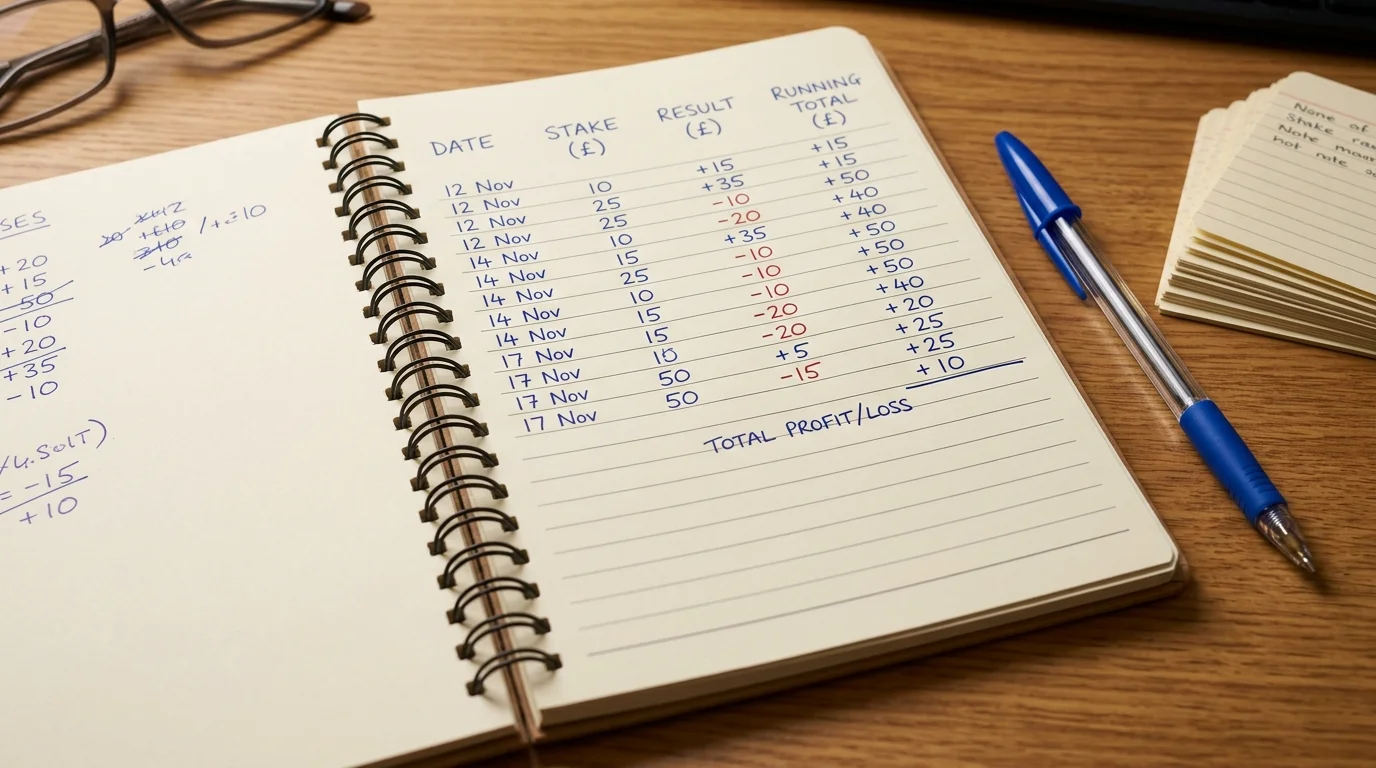
Building a small spreadsheet of crew tendencies is genuinely tractable for a UK bettor. There are roughly 25 active referees who carry the bulk of NBA assignments. Tracking each one’s foul rate, free throw rate, and game total relative to projection across a season gives you a small set of leading indicators for first-half scoring. The edge here is real but small, and it stacks with other situational factors rather than carrying bets on its own.
The Friday and Sunday patterns
There is a consistent weekly pattern in NBA first-half scoring that gets mentioned in betting circles and underweighted in actual market pricing. Friday night games tend to start slowly across the league, with first-half scoring 2 to 4 points below the model projection. Sunday afternoon and evening games run closer to projection. Wednesday night games run slightly hot.
The reasons are speculative – travel patterns, prior-game fatigue, end-of-week recovery – but the pattern is observable in multiple seasons of data. The market knows the pattern exists but often does not fully adjust for it, especially on individual games where the pattern is just one factor among many.
I do not bet first-half unders on Fridays as a blanket strategy. I do tilt my projections slightly toward the under on Friday games when other factors are neutral, and that small adjustment has been a positive contributor to my totals performance over time. Day-of-week patterns are the weakest of the situational inputs I track, but they exist, and ignoring them entirely costs a small amount of edge.
Live first-half betting and the late-half window
The most actionable live first-half betting window is the last few minutes of the second quarter. At that point, you know most of what is going to happen in the first half – the scoring trajectory is established, the foul situations are clear, the rotation patterns have played out. The market still offers first-half bets but with diminished volatility because the remaining time is short.
What this lets you do: project the final first-half score with much higher confidence than you could pre-game, compare to the line, and bet specifically calibrated positions. If a game is on pace for a 122-point first half and the line is 119 with three minutes remaining in the second quarter, the over needs only 4 more points across the remaining 3 minutes – a low bar that the market sometimes prices too conservatively.
The constraint is timing. UK books vary in how late they accept first-half bets, with most cutting the market off at the 2-minute mark of the second quarter and some going earlier. The bettors who do well in this niche know each book’s cut-off behaviour and act before the close. The same attention to operator-specific behaviour shows up across my broader approach, including how I think about whether the prices I am taking systematically beat the closing number across a season.
The second-half setup play
One pattern worth knowing even if you do not bet it: the first-half result sets up the second-half market in predictable ways. A team that overperformed expectation in the first half – leading by 12 when they were expected to lead by 5 – typically regresses in the second half. The market sometimes prices the second-half spread as if the first-half pattern will continue, when the underlying probability is closer to mean reversion.
This produces second-half betting opportunities on the team that underperformed in the first half. Their second-half projection is closer to their season average than their first-half showed. If the line implies they will continue to be outperformed at the first-half rate, the bet is on them.
I touch this market occasionally but not systematically. The variance is high enough that the edge needs to be substantial, and substantial edges in this spot are not common. It is a market I watch more than bet.
Where first-half markets sit in a portfolio
For me, first-half markets account for maybe 15 to 20 percent of my NBA betting volume during the regular season. The frequency is supported by the structural cleanness of the market – starters on the floor, predictable rotations, calibrated lines that are sharp but not perfect. The work transfers from full-game handicapping smoothly, which is rare in segment markets.
The bettors who avoid first-half markets entirely are leaving edges on the table that the broader full-game markets do not offer. The bettors who treat first-half markets as just another over/under to bet are not capturing the structural advantage these markets offer over fourth quarters or quarter sides. The right approach is selective use, with situational reads driving the bets and discipline preventing overexposure to a niche segment.
The clean window the market gives you
NBA first halves give the bettor a 24-minute window where the analytical inputs are at their most predictive: starters playing, rotations stable, fatigue minimal, referee tendencies showing through, pace dynamics fully expressed. That window is shorter than the full game and produces tighter variance around projection. The market reflects most of this but not all of it, and the gap between full reflection and incomplete reflection is where the bets live.
Across a decade of betting NBA in the UK, first halves have produced the most consistent results of any segment I have engaged with. Not the highest variance, not the biggest single wins, just the most reliable expression of analytical work translating into positive expected value. That reliability is rare in betting markets, and recognising it requires the patience to bet a niche corner consistently rather than chasing the more dramatic full-game opportunities every night. The dramatic bets get the attention. The reliable ones build the bankroll.
What percentage of NBA scoring happens in the first half?
Around 48 to 52 percent on average, with the slight tilt toward the second half driven by late-game free throws and comeback attempts in close games.
Are first-half spreads typically half the full-game spread?
They run around 55 to 60 percent of the full-game spread, not exactly half. Teams with strong starters relative to bench depth are better first-half bets than full-game bets.
When do UK bookmakers close NBA first-half markets?
Most cut off around the two-minute mark of the second quarter, with some going earlier. Knowing each operator’s cut-off behaviour matters for capturing late first-half value.
Prepared by the nba bet of the day editorial staff.