Mandatory Responsible Gambling Tools for UK Bettors
 Available in US
Safer NBA Betting: Practical Experience With Deposit Limits and GAMSTOP
March 2019. I’d been up since 6am the previous morning. The Lakers were tipping off against the Nuggets at 2am UK, and I’d already had a long Saturday at the bookies that hadn’t gone my way. I placed a £400 stake on LeBron over 28.5 points – three times my usual unit, on a prop I’d normally never touch that late at night. He finished with 23. I closed the laptop and stared at the ceiling for an hour.
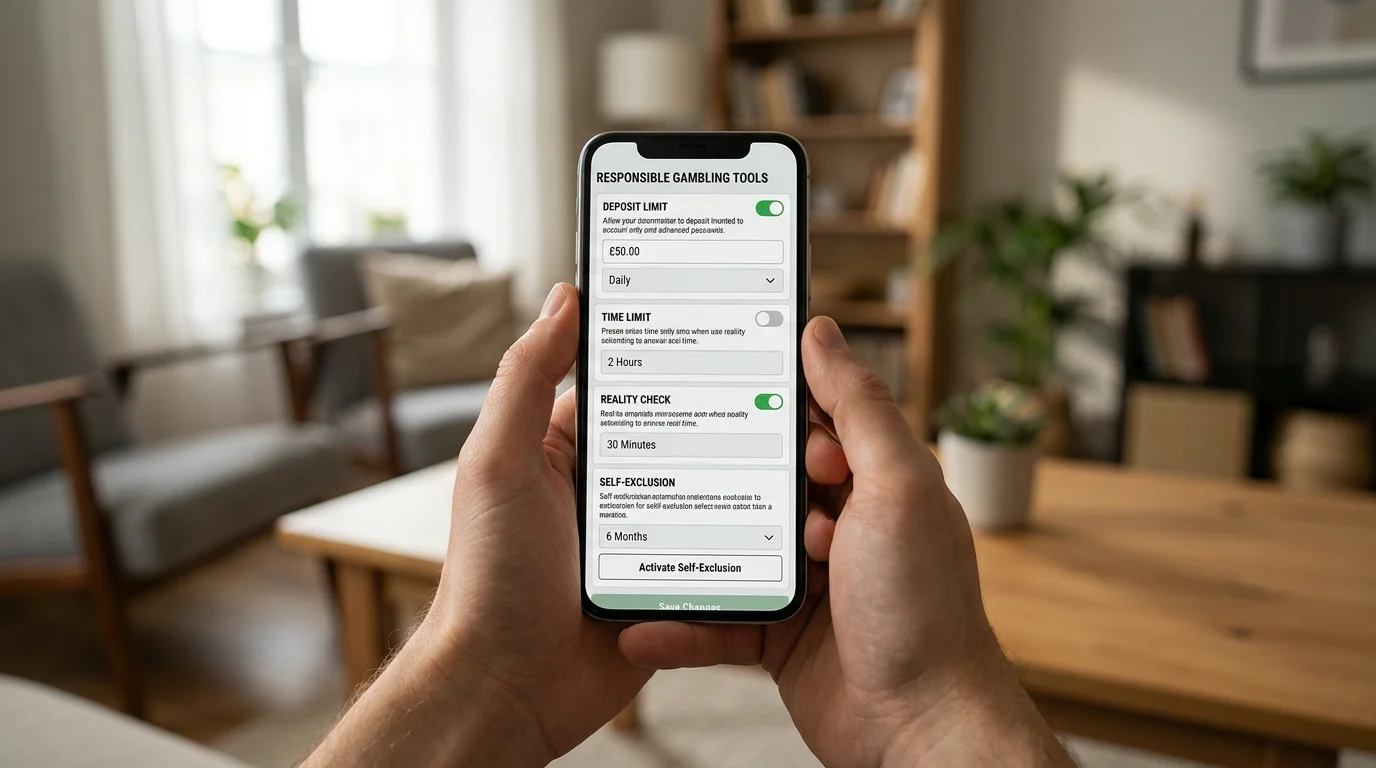
The next morning I set a £50 maximum stake on every account I held, and I set a 1am UK deposit cutoff that I could only override with a 48-hour cooling period. Both tools were already there. I just hadn’t been using them. The lesson wasn’t that I had a problem – by the formal definitions, my PGSI score wouldn’t have flagged. The lesson was that the tools exist for moments exactly like the one I’d just had, and the wisest version of me – the version not making a decision at 2am after eighteen hours awake – should make decisions for the version of me that is. That’s what the responsible-gambling toolkit is for.
GAMSTOP and the architecture of UK self-exclusion
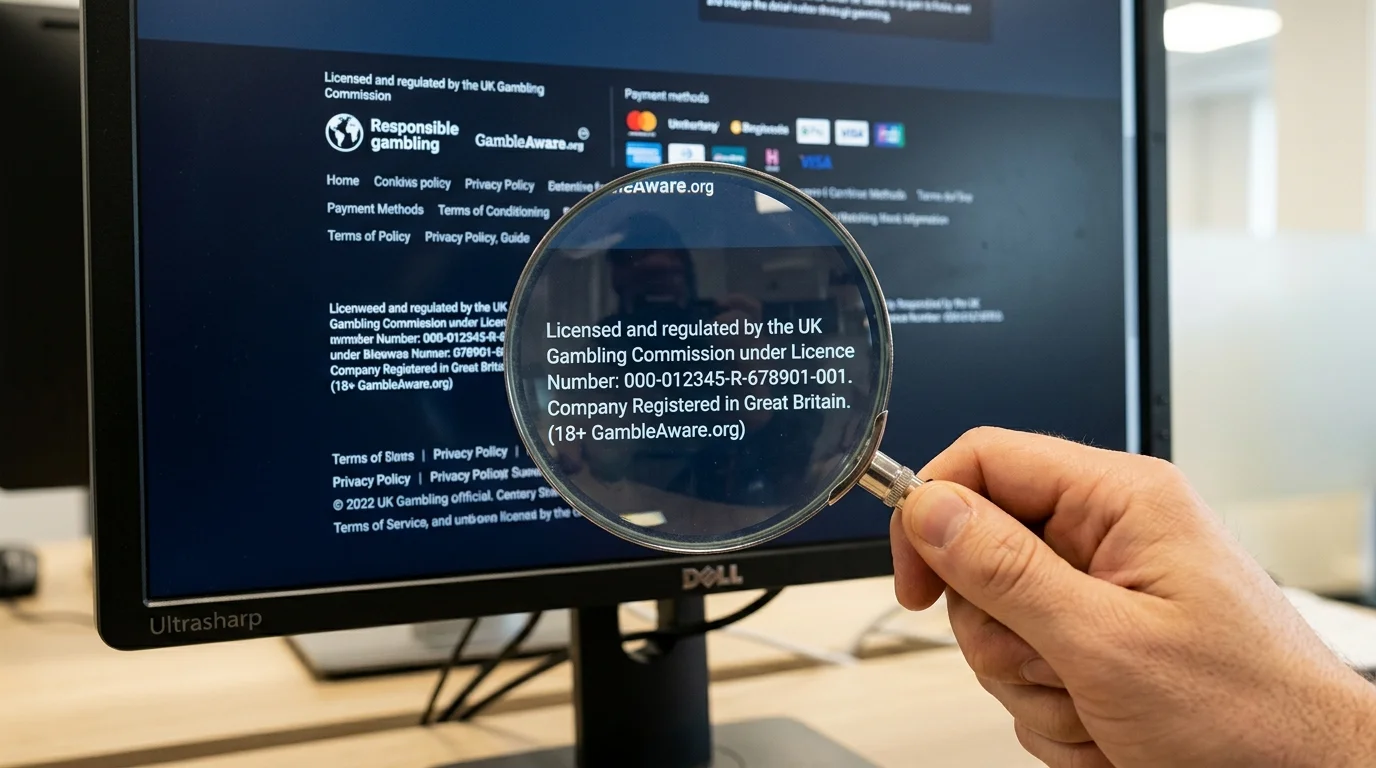
GAMSTOP is the national self-exclusion scheme for Great Britain. It is run independently from any individual operator and applies, by Gambling Commission requirement, to every UKGC-licensed online betting and gaming operator. When you register with GAMSTOP, your details are shared with every licensed operator in the country, and within 24 hours your account at every site is blocked for the duration you’ve chosen.
The exclusion periods are 6 months, 1 year, or 5 years. The choice is binding – once registered, you cannot reverse the decision before the period expires. Bookmakers cannot lift the block at their discretion, and they cannot accept your business through a workaround account. The architecture is designed to put a wall between you and the action that you genuinely cannot scale during the exclusion period.
What GAMSTOP does not cover: it covers only UKGC-licensed operators, which means offshore sites remain accessible. That’s part of why the migration to unlicensed operators is such a concern – H2 Gambling Capital estimated the UK unlicensed gambling market at £16.6 billion in 2025, against roughly £5 billion in 2019, and at least some of that growth represents customers who have self-excluded from the regulated estate and gone looking for action elsewhere. The protection only works if you stay within the regulated framework, which is one of the strongest arguments for not betting offshore in the first place.
Two operational points worth knowing. GAMSTOP registration is a five-minute process online and is free. The scheme does not affect your credit record, your banking, or any non-gambling service. And if you change your phone or address during an active exclusion, your new details still register against your existing identity verification – the scheme is keyed to person, not device.
Deposit, time, and loss limits at UK NBA bookmakers
Every UKGC-licensed sportsbook is required to offer customer-controlled limits on deposits, time spent on the platform, and net losses. The limit categories overlap with each other deliberately, because different limits suit different risk profiles, and the regulator’s expectation is that the operator presents them clearly enough that any customer can find them.
Deposit limits are the most-used tool. You set a daily, weekly, or monthly cap on the total money you can move from your bank account into the sportsbook. The cap binds at the deposit step, so even if you have winnings in your balance to bet with, you cannot top up beyond the limit. Increases to the limit are subject to a regulatory cooling-off period – typically 24 hours, sometimes longer – designed to prevent in-the-moment overrides. Decreases take effect immediately, because there’s no protective rationale for delaying a tighter limit.
Time limits cap the duration of any individual session, with the bookmaker required to alert you and pause the session when the limit is hit. For NBA punters in the UK, time limits become particularly relevant because the games sit in the overnight window – sessions started at 11pm can drift to 4am without conscious decision-making, and a 90-minute or 2-hour session cap forces the conversation about whether you actually want to be awake at that point.
Loss limits are the bluntest instrument. You set a maximum net loss over a chosen period; once you hit the threshold, the account stops accepting bets until the period resets. They’re useful because they convert what would otherwise be an emotional decision – “I’m down £200, do I keep going?” – into a structural one made before the loss appeared. The regulator views loss limits as an effective harm-reduction tool, particularly for customers whose betting volume fluctuates with mood or external stress.
Reality checks and session history as quiet protections
Reality checks are pop-up notifications that interrupt your session at intervals you choose, telling you how long you’ve been logged in and how much you’ve staked. The bookmaker is required to offer them; you choose the frequency, typically 30 minutes, 60 minutes, or hourly intervals. The notifications cannot be dismissed without an active acknowledgement – they’re designed specifically to break the flow state of extended sessions.
I underestimated reality checks for years. The pop-up at 90 minutes saying “you’ve been logged in for 90 minutes and staked £180” feels intrusive the first few times, and then it becomes the most useful tool in the box. It’s not preventing me from betting – it’s giving the part of my brain that handles long-term decisions a clean window to assess what the part of my brain making bet-by-bet decisions has been doing. Most of the time the assessment is fine. The times it isn’t are the times you need the assessment most.
Session history is the underused twin of the reality check. Every UKGC-licensed bookmaker is required to make your historical betting activity available – deposits, withdrawals, total stake, net result, by day, week, month, and year. The dashboards vary in quality, but the data is always there. For an NBA punter, reviewing the previous month’s session history before each new month begins is the single most effective preventive habit you can build. It tells you what you actually did, against what you remember doing, and the gap between those two pictures is consistently more instructive than any individual bet outcome.
NHS pathways since the April 2025 levy switch
The gambling-harm treatment landscape in the UK shifted materially in April 2025 when the statutory Gambling Harms Levy came into force and NHS England formally took on responsibility for administering the prevention, treatment, and research strands of the resulting fund. Before April 2025, gambling-harm treatment was largely delivered through GambleAware-commissioned providers; from April 2025 onwards, the NHS is the central administrator, with the levy funded directly from the regulated industry.
The practical effect for individual punters is that the treatment pathway has become more clinically integrated. Specialist NHS gambling clinics now operate across England, with new sites opening through 2025 and 2026. Referrals can come from a GP, from a self-referral, or from a hospital service treating a comorbid condition – and the NHS’s own data shows that nearly 2,000 people were referred to specialist services between April and September 2024, up from 800 across the same period a year earlier. The trend line on referrals is rising fast, which reflects both genuine increase in need and reduced friction in the pathway.
The prevalence picture across the wider population is worth knowing too. According to the NHS Health Survey for England 2024, around 5 percent of adults in England exhibit at-risk or problem-gambling behaviours, with under 1 percent at the clinical problem-gambling threshold. The Adult Psychiatric Morbidity Survey, jointly published by NHS England and DHSC, places the clinical problem-gambling threshold at 0.3 percent of adults – meaning fewer than one in 300 UK adults meets the formal diagnostic threshold, though far more exhibit some at-risk markers. Heather Wardle, the public-health researcher whose work on gambling harm has shaped much of the current policy conversation, put it bluntly: “it’s hard to prove what harm is being done because it’s a generational thing and the harm comes much further down the line. We’re creating the conditions that normalise gambling for a generation.” That framing – harm as gradient, not as binary – is the lens the current regulatory regime is being built around.
For any UK NBA punter wondering where the line sits between “engaged hobby” and “I should look at this differently”: the at-risk gradient runs through behaviours like chasing losses, betting beyond what you can afford to lose, hiding gambling from people close to you, and persistently betting outside of pre-decided limits. The tools above – GAMSTOP, deposit and loss limits, reality checks, session reviews – are the architecture you use to stay clearly on the engaged-hobby side of that line. The follow-up question of what the prevalence data actually shows, and how the PGSI scoring system maps to behaviour patterns, is something I cover in my deep dive on problem gambling prevalence in the UK.
Does GAMSTOP cover every UKGC-licensed bookmaker that takes NBA bets?
Yes – registration with GAMSTOP applies to every UKGC-licensed online gambling operator in Great Britain. Within 24 hours of registering, your account at every licensed site is blocked for the chosen exclusion period of 6 months, 1 year, or 5 years. The block cannot be lifted before the period expires, and operators cannot accept your business through workaround accounts. The single coverage gap is offshore, unlicensed operators, which sit outside GAMSTOP’s reach – another reason to stay within the regulated framework if you’ve decided you need the protection in the first place.
How do NHS gambling-harms pathways work since the April 2025 levy switch?
From April 2025 onwards, NHS England formally administers the prevention, treatment, and research strands funded by the statutory Gambling Harms Levy. Specialist NHS gambling clinics now operate across England, with referrals available through a GP, through self-referral, or through hospital services treating comorbid conditions. NHS data shows nearly 2,000 referrals between April and September 2024, up from around 800 across the same window in 2023 – a sharp rise that reflects both growing need and reduced friction in the pathway. The clinics offer assessment, structured treatment programmes, and connection to peer-support networks.
Prepared by the nba bet of the day editorial staff.