Live NBA Quarter and Halftime Betting in the UK
 Available in US
- Rotational Trends: Exploiting Soft Live Prices in Halftime Betting Windows
- First quarter markets and pace dependency
- Halftime markets and the second-half adjustment
- Third quarter as a unique segment
- The fourth quarter problem
- Quarter side bets and the volatility issue
- Live quarter betting and the timing window
- Why these markets reward consistency over volume
- The market gap that does not close
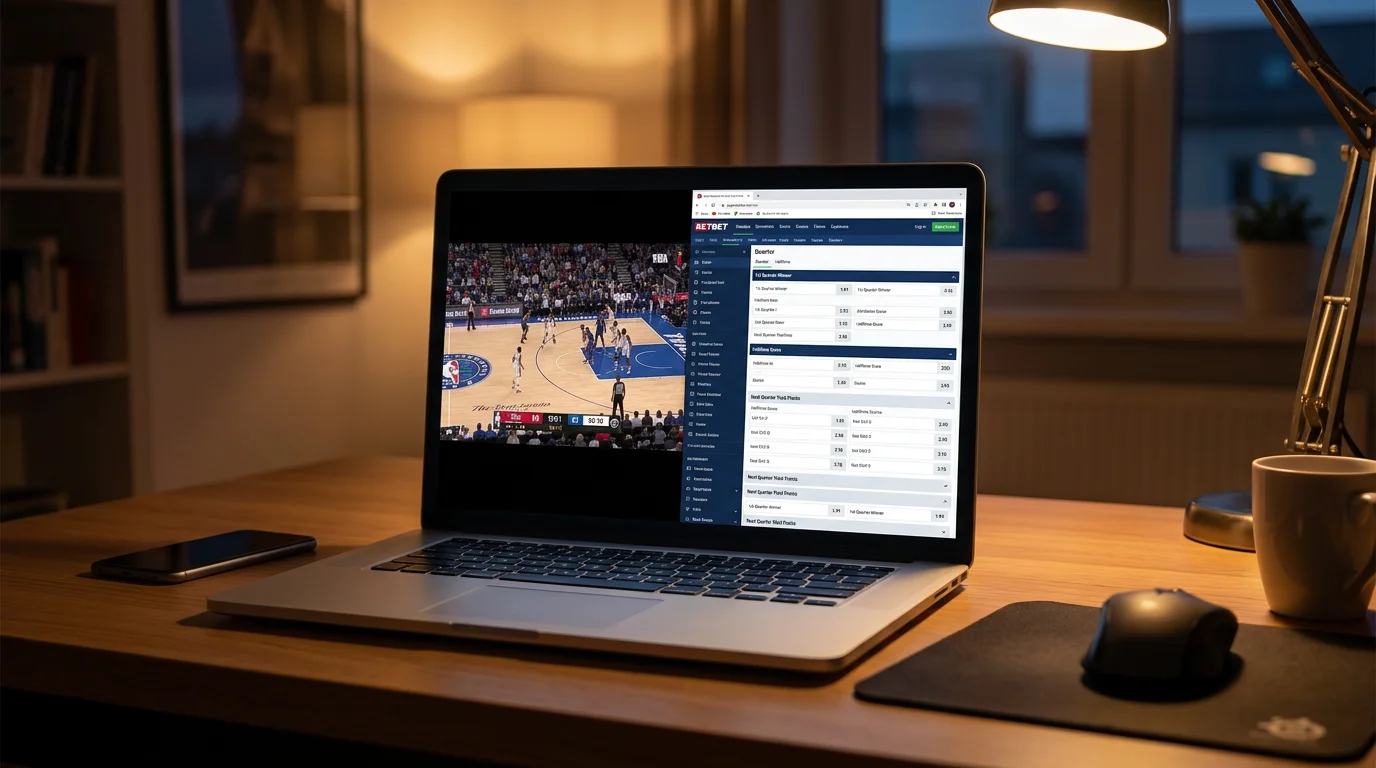
Rotational Trends: Exploiting Soft Live Prices in Halftime Betting Windows
The first time I made consistent money on a non-full-game NBA market was on first quarter overs in games featuring a specific referee crew known for letting teams play. I tracked the pattern for two months on a spreadsheet, the edge held, and I have been a believer in segment markets ever since. NBA quarter and halftime betting is one of the underutilised parts of UK sports betting, partly because it requires more work than full-game bets and partly because the books have not fully sharpened the pricing.
The opportunity is real but narrow. These markets reward bettors who do their homework on situational factors and punish bettors who treat them as random number generators. The structural inefficiency exists because retail betting volume is lower on quarter and half markets, so the pricing receives less correction than the main spread and total markets get.
First quarter markets and pace dependency
First quarter scoring in modern NBA averages around 28 points per team, with a fair amount of game-to-game variance. The total for a first quarter typically sits at 55 to 58, and the line moves based on the same pace and efficiency inputs as the full-game total but compressed into a smaller window.
What makes first quarters different from later quarters: starters are on the floor for the full 12 minutes, fatigue is minimal, and rotation patterns are predictable. The starting unit’s per-possession output is more stable than what you see across the full game, which means projections should be tighter. If your model says the starting units should produce 60 first quarter points combined and the line is 56, that 4-point gap is meaningful in a way that is harder to find in fuller game samples.
The hard part is that first quarter overs are also where the public piles on, and the books know it. Lines are often shaded slightly toward the over to capture public action. The genuine edge appears on first quarter unders, specifically in games featuring two strong defences or games on Friday nights when the entire league seems to start slowly. That weekly pattern is real, observable, and goes underweighted in pricing.
Halftime markets and the second-half adjustment
Halftime betting opens during the actual halftime break, and the markets price the second half as a fresh game using the first half’s information. This is where the analytical opportunity is greatest, because you have 24 minutes of actual data on the specific matchup, including referee tendencies, foul situations, and which lineups are working.
The first quarter does not tell you much about the second half. The first half does. If a team has been getting murdered on the offensive glass, that pattern usually continues. If a star player is in foul trouble, the second half projection has to account for reduced minutes. If the pace has run dramatically above or below expectation, the second half adjusts back toward season norms but rarely fully.
The halftime betting window is short – typically 10 to 12 minutes – and decision velocity matters. The bettors who do well in this market have pre-built models for halftime-adjusted projections, so they are not building the analysis from scratch in the live window. They are comparing the live line to a pre-loaded reference number and acting fast. I keep a spreadsheet with the halftime line ranges I would consider for each starting line, and the spreadsheet is what I look at in real time, not the raw game data.
Third quarter as a unique segment
Third quarters are statistically different from first and second quarters. Teams come out of the halftime break with adjusted game plans, and the team that was losing at the half tends to be aggressive about closing the gap early. Third quarter scoring averages slightly higher than first quarter scoring league-wide, in part because trailing teams are willing to take more risks earlier in the half.
The third quarter market is one of the less liquid segment markets at UK books, which makes it both more inefficient and harder to bet at scale. Lines might not move much even with significant money behind them, but they also might not be tightly priced to begin with. The edge work here is reading whether the trailing team’s first-half issues are correctable in real time. If their three-point shooting was just cold and they are getting good looks, expect a third-quarter surge. If they are getting the looks they wanted and missing, that pattern continues into the second half.
I do not bet third quarters often. The combination of low liquidity, limited information advantage, and decent baseline efficiency on the lines means the edge work has to be exceptional to justify the bet. When I do find a spot, it is usually a halftime-adjusted total bet rather than a side bet – totals are more responsive to situational factors than spreads in this segment.
The fourth quarter problem
Fourth quarter betting markets are dangerous. The variance in how teams play the fourth quarter is enormous – blowouts produce garbage time, close games produce careful possession-by-possession execution, and the difference can be 30 points of scoring environment between the two scenarios.
This is one of the reasons I rarely bet fourth quarter markets pre-game. The information you would need – what the score will be entering the fourth quarter – is not available, and your projection has to span an enormous range of possible scenarios. Live fourth-quarter betting is more analytical because you actually know the situation, but the books price live fourth quarters tightly because they know that is when sharp money concentrates.
The exception that works: fourth quarter unders in games projecting to be lopsided. If you have a 12-point favourite, the expectation should be that the fourth quarter is played with bench units against bench units, lower intensity, and lower scoring. The market sometimes prices the fourth quarter total at the same per-quarter rate as the rest of the game, which is wrong on average for blowout candidates. The under in those spots is a slow, undramatic edge that compounds.
Quarter side bets and the volatility issue
Betting which team wins a specific quarter – the quarter spread or quarter side market – is the highest-variance NBA betting market I know of. The sample within a single quarter is so small that even a substantial talent gap between two teams produces uncertain outcomes. A team that wins a full game by 12 might lose two of the four quarters, often the bookend quarters where starters rest more.
The mathematical edge is harder to find here than in any other segment market. The variance is high, the books price the lines tightly because they are aware retail bettors love quarter side bets, and the information advantage is hard to maintain across 4 separate quarters of decision-making.
If you bet quarter sides, restrict it to first quarter sides – the segment with the most information stability – and bet only when your full-game spread projection diverges meaningfully from the line, suggesting the favourite is being underrated in a way that should show up in the first quarter when starters are on the floor.
Live quarter betting and the timing window
The most predictable live quarter betting situation is the late-quarter foul trouble scenario. A star player who picks up their third foul in the second quarter is likely to sit the rest of the half. The market reacts to fouls but not always quickly enough, and there is a window of 30 to 60 seconds where the live line is still pricing the star’s continued presence on the floor.
This is one of the few sustainable edges I have found in live NBA betting at the quarter and half level. The work is in being attentive during the actual game – fouls are visible on every broadcast and tracking is straightforward – and being fast enough to place the bet before the line adjusts. UK books vary in their reaction speed; faster books offer less edge but more consistent pricing, slower books offer more edge but more friction in actually getting bets confirmed.
The other live edge worth noting: end-of-quarter desperation shots. The team trailing at the buzzer often heaves a long three. These attempts have a low conversion rate but produce predictable variance in the final score of the quarter. The market sometimes prices the under on the quarter total without accounting for the desperation attempt, and adjusting for that gives you a small but real edge in the last 30 seconds of close quarters.
Why these markets reward consistency over volume
Quarter and half markets are not high-volume bets in a healthy NBA betting portfolio. They are situational, requiring specific conditions to make sense, and the bettor who tries to find a quarter bet every night will end up forcing bets where no edge exists.
My typical week has maybe 3 to 5 quarter or half bets, against 25-plus full-game spread bets. The segment markets are seasoning, not the main course. They work best as supplements to a strong core process, deployed when the situational factors line up clearly – referee assignments favouring high scoring, back-to-back fatigue affecting one team’s energy in the first quarter, halftime adjustments based on visible first-half evidence. The patient approach here pairs with the broader rhythm I describe in how I structure unit sizing and bet selection across a typical NBA week, which keeps these high-variance markets in proportion to the rest of the operation.
The market gap that does not close
UK gambling industry GGY hit 15.6 billion pounds in the year ending March 2025, growing 7.7 percent year over year, and a meaningful portion of that growth is in segment betting markets. The books have responded with more markets but not always with sharper pricing, because the trading resource required to perfectly price every quarter and half market across every NBA game on a given night exceeds what most UK operations deploy. That mismatch is where retail edge lives.
The gap will close over time. Automated pricing tools are improving, and the books that lag are losing money to bettors who exploit the inefficiency. For now, the segment markets remain one of the few places where a UK NBA bettor with a small spreadsheet and a willingness to do situational work can find edges that the main markets have already corrected away. The work is the entire moat. Without it, segment betting is just full-game betting with worse vig.
Are NBA quarter markets profitable for UK bettors?
They can be, but only with situational discipline. The variance is high, liquidity is lower than full-game markets, and the edges come from specific conditions like referee tendencies or fatigue patterns, not from generic strategies.
When does halftime betting open?
At the actual halftime break of the game, typically for 10 to 12 minutes before the third quarter tips off. The window is short, so pre-built reference projections help you act fast.
Should I bet on which team wins a specific quarter?
Generally no. Quarter side bets carry high variance and the books price them tightly because retail bettors love them. If you do bet them, restrict to first quarter sides where information is most stable.
Prepared by the nba bet of the day editorial staff.