Dissecting Welcome Offers and UK Free Bets on the NBA
 Available in US
Stake-Not-Returned Mathematics: Calculating True Worth of Welcome Offers
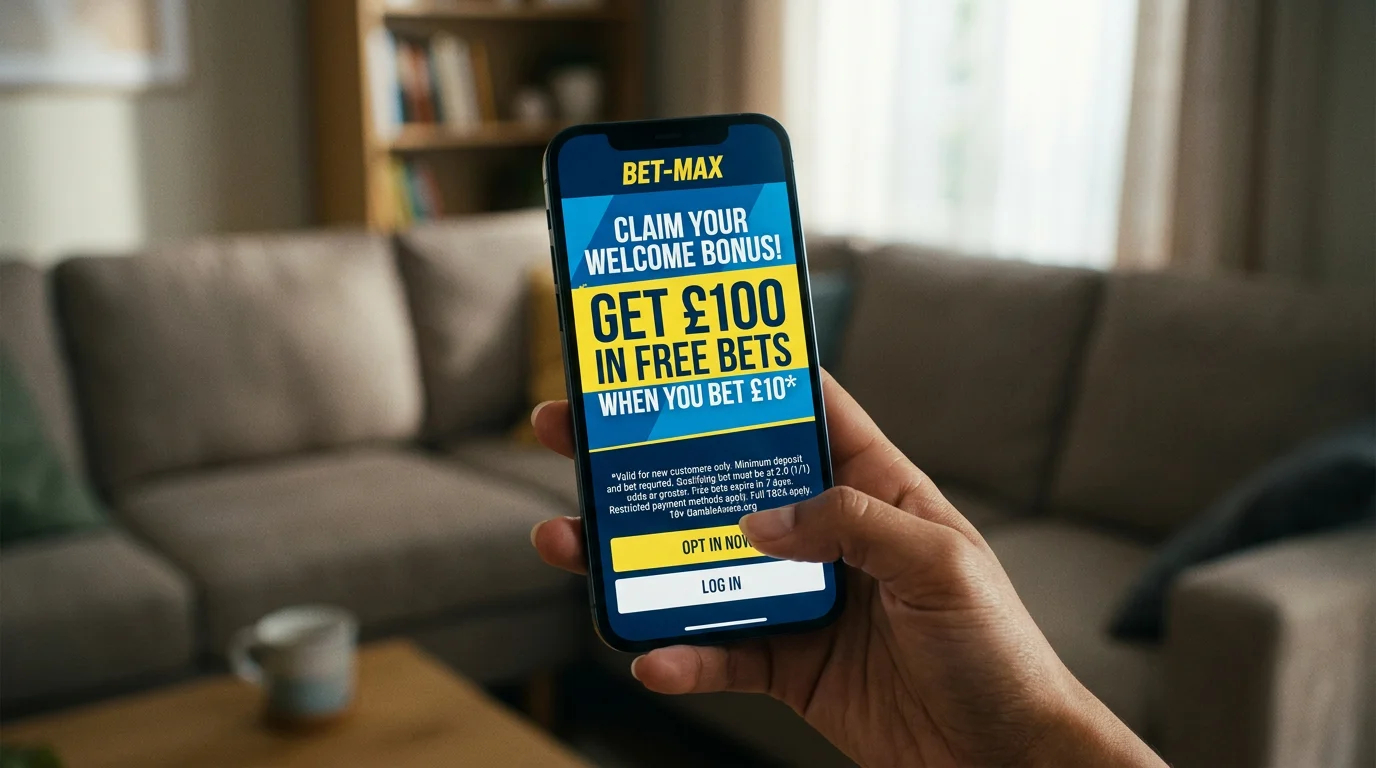
Every January, a wave of new NBA punters lands in the UK market and sees the same thing – banner after banner advertising “£30 in free bets when you stake £10”. The implied generosity is enormous. Three times your stake, back, just for showing up. Twelve years in this game, and I still occasionally see the headline and feel a flicker of “wait, that’s a great offer”. Then I run the conversion maths, and the flicker dies.
A £30 free bet isn’t worth £30. It is worth, depending on how you deploy it, somewhere between £20 and £24. That’s still real money – I’m not telling anyone to ignore free-bet offers. I’m telling you that the headline number isn’t the value, and that the gap between the two is where the bookmakers fund their entire customer-acquisition operation. The £2 billion the UK gambling industry spends a year on advertising pays itself back precisely because punters confuse the face value of the chip with its cash equivalent.
Always ensure that the promotional offers you claim are from operators that hold a valid UKGC license for safe and regulated NBA betting.
The “stake not returned” mechanic that costs you the stake
A free bet in the UK is, almost universally, a “stake not returned” instrument. That phrase is the whole story. When you place a normal bet of £10 at 2.00 and win, you get £20 back – your £10 stake plus £10 in winnings. When you place a £10 free bet at the same 2.00 and win, you get £10 back – just the winnings. The stake doesn’t return because the stake was a token, not real money. It existed to be wagered. Once wagered, it disappears.
That single mechanic is what drives the gap between face value and real value. A £30 free bet placed at 2.00 returns £30 if it wins. A £30 cash bet at 2.00 returns £60 if it wins. The bookmaker isn’t giving you £30. They’re giving you the right to compete for somewhere between £30 and a bit less, depending on the price you choose to place it at.
The longer the odds you back, the more of the face value you recover, because the “stake not returned” hit becomes a smaller fraction of the total return. A £30 free bet at 5.00 returns £120 if it wins – the £30 stake doesn’t return, but the £120 of winnings still represents a substantial fraction of the cash-equivalent value. A £30 free bet at 1.50 returns £15 if it wins, which is barely worth the click. The implication is structural: free bets reward longer-odds usage, which is why every halfway thoughtful UK punter saves their free bets for accumulator legs or longer NBA props rather than spending them on 1.30 favourites.
The cash conversion rate formula every UK punter should know
I run every NBA free-bet offer through a simple formula before deciding how to use it. Cash-equivalent value equals face value, multiplied by (decimal odds minus 1), divided by decimal odds.
For a £30 free bet at 2.00:
£30 x (2.00 – 1) / 2.00 = £30 x 1 / 2 = £15 cash-equivalent expected value at fair odds. Adjust for the actual win probability of the bet and the bookmaker’s margin, and the true cash-equivalent narrows further.
For a £30 free bet at 3.00:
£30 x (3.00 – 1) / 3.00 = £30 x 2 / 3 = £20 cash-equivalent at fair odds.
For a £30 free bet at 5.00:
£30 x (5.00 – 1) / 5.00 = £30 x 4 / 5 = £24 cash-equivalent at fair odds.
The pattern is unambiguous. The closer your free-bet price gets to a true coin-flip, the less of the face value you extract. The further you push into longshot territory, the more you extract. The reason most thoughtful bettors converge on roughly the 2.50 to 5.00 range for free-bet deployment is that you’re capturing 60 to 80 percent of face value while still backing prices you’d be willing to bet at with real money.
Two caveats sharpen the picture. First, the formula assumes a fair price – once you account for the bookmaker’s margin, the true cash-equivalent is lower than the calculation suggests. Second, the calculation is an expected value. The realised value of any individual free bet is either 100 percent of the winnings if it lands, or 0 if it doesn’t, with the long-run average converging on the formula across many free-bet deployments. For a one-shot welcome offer, variance dominates – the headline £30 might end up being £0 in your pocket, or it might end up being £120, depending on whether the specific bet lands.
Wagering requirements on accumulator bonuses
The standard NBA free-bet offer comes with a single qualifying bet. The variant that catches more punters out is the accumulator bonus – where placing a parlay of certain minimum odds unlocks a free bet or a bonus credit. These offers usually carry wagering requirements that materially reduce the realised value.
A typical UK NBA acca-boost offer might promise a 20 percent boost on five-leg parlays with each leg priced 1.80 or longer. The headline reads as free value. Run the maths through, though, and the picture shifts. The cumulative odds of a five-leg 1.80 parlay are 1.80^5 = 18.90 decimal – meaning the parlay implied probability is 5.29 percent. The 20 percent boost on a £10 stake adds £18.90 to the potential winnings, which sounds substantial. But the boost is contingent on a bet that lands roughly one time in 19 – and parlay overround sits around 24 percent on average, with parlay hold reaching as high as 24.2 percent against just 4.4 percent on singles. The boost is taking 20 percent off a heavily margined product. The cash-equivalent of the boost is much less than the headline suggests.
Wagering requirements on the resulting bonus credit, when applied, add another layer of erosion. A “£20 bonus” with a 5x wagering requirement means you must stake £100 of cumulative bets before any winnings convert to cash. At a 5 percent bookmaker margin, the expected loss on £100 of stake is £5 – which is 25 percent of the bonus’s face value, lost on the wagering pathway alone. The economics rarely look as attractive once the layers are unpacked.
Discover trustworthy bookmakers and exclusive daily analysis at NBA Bet of the Day to maximize your returns.
Who the offers are actually targeting
I want to close with a piece of regulatory context that punters rarely encounter but should. The Gambling Commission has been explicit that free-bet offers function as a behavioural marker for problem gambling. Their own data, cited in Parliament by the regulatory minister Stephanie Peacock, shows that a person with a problem-gambling profile is nine times more likely to receive a free-bet offer than the average customer. That ratio is not accidental – it reflects how operators target their bonus marketing based on observed behaviour.
The implication is uncomfortable. Free bets, in aggregate, are not designed to convert recreational customers into loyal regulars. They are designed to identify and accelerate the spending of the customer segment most likely to keep playing through a losing run. The £2 billion the industry spends on advertising annually leans heavily on free-bet promotion because the conversion mechanics work – but they work differently on different customer profiles, and the customer profiles where they work hardest are the ones least able to absorb the losses that follow.
The minister’s framing in Parliament was direct: it’s only through measures including the restriction of bonus and free-bet offers that the regulatory regime can be brought into the modern age and protect people from harm. The direction of travel is tighter, not looser. For an individual UK NBA punter, the takeaway is straightforward. Use free bets thoughtfully – they have positive expected value if you’re going to bet anyway – but understand that the offer architecture exists to extract value from the population, not from you specifically, and the architecture works best on the customers who can least afford it. The natural follow-up to the free-bet conversation is the broader question of the safer-gambling toolkit, which I cover in my piece on responsible gambling tools at UK NBA bookmakers.
What is the typical cash-equivalent value of a £30 free bet at a UK bookmaker?
Between £18 and £24, depending on the odds you deploy it at and the bookmaker’s margin on the chosen market. A £30 free bet placed at decimal 2.00 has a fair cash-equivalent of around £15 before margin; at decimal 3.00 it’s around £20; at decimal 5.00 it’s around £24. The further you push toward longer prices, the more of the face value you extract, because the stake-not-returned mechanic costs you less proportionally when the winnings dwarf the stake. Most thoughtful UK punters deploy free bets in the 2.50 to 5.00 range as a balance between extracting face value and backing prices they’d genuinely take with real money.
Why does the Gambling Commission flag ‘free bet’ offers as a problem-gambling marker?
Because their own data shows that customers with a problem-gambling profile are nine times more likely to receive a free-bet offer than the average customer. The ratio reflects how operators target bonus marketing based on observed behaviour – heavier losers receive heavier bonus deployment, on the basis that the bonus product is the most reliable way to re-engage customers who are otherwise on a losing run. The regulatory minister has been explicit in Parliament that restricting bonus and free-bet wording is part of the reform agenda for exactly this reason.
Created by the ”nba bet of the day” editorial team.